Blog

  • Nomadic Living Early Years

    Nomadic Living Early Years

    My nomadic wanderings has four distinct periods.  The two earliest episodes were sixty years ago bumming around Europe in the 60s and fifty years ago living in a VW bus in the 70s.  The thirty years between 1980 to 2010 were lost to work, relationships, material excess and wealth accumulation.  All of that is ancient history.  The third and fourth episodes of wandering are more relevant to my present nomad lifestyle.

    The third chapter of my nomadic life began with retirement on August 10, 2010 and ended the first day of COVID lockdown in Cape Town on March 17, 2020.  These ten years started with several attempts to relocate to the my ideal retirement location.  My initial picks were based on weekend and holiday experiences I had during my working years.  I discovered there is no ideal location. Every place has pluses and minuses. The biggest factor for me was weather which is ideal year-round in very few places.

    I also learned how burdensome material possessions are.  I started out with a large house, three cars, a sailboat, and etc. The “ball and chain” grew smaller each time I moved.  Purging useless possessions preceded slowly. I didn’t feel free until I sold my last real estate holding on April 1, 2014.  I have not owned or leased a home or had a real physical address since then. I keep a small van that spends most of the time in a storage lot somewhere in the USA.  It doubles as a storage locker and camper for North American road trips.  The van currently costs $60 a month to insure and store.  It is my largest fixed expense.

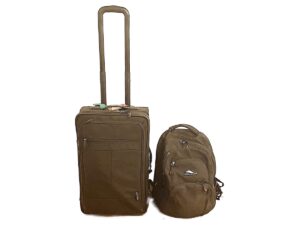
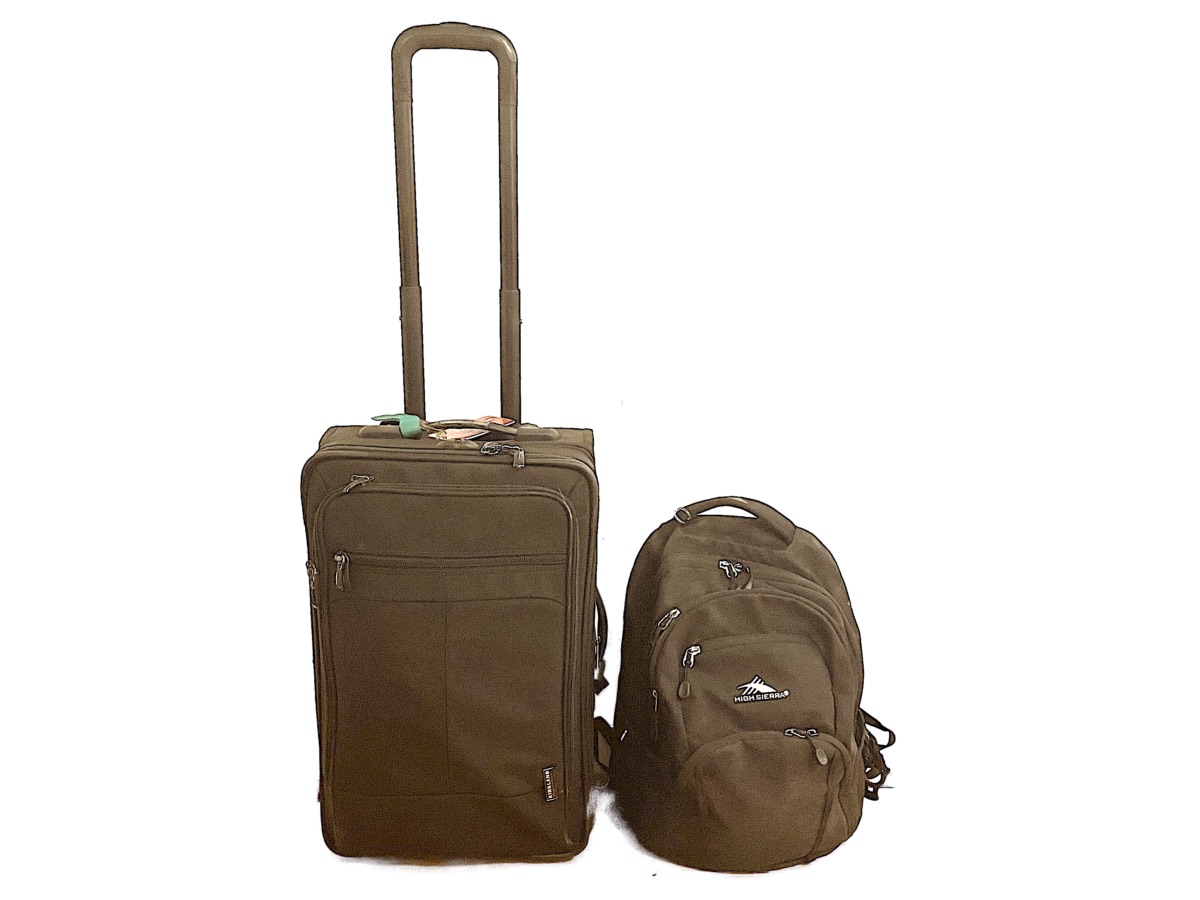
    I mastered the mechanics of nomadic living in the ten years between retirement and Covid. Most of the time I lived out of a day pack and a carryon roller bag.  I felt comfortable and confident continuously traveling around the world following good weather to interesting places and warm sunny beaches.  My basic migration route was two 5-month global circumnavigations each year.  I tried to spend May through September in north temperate and south tropical latitudes. November through March were spent in south temperate and north tropical latitudes.  October and April were pitstops in the USA to take care of medical, financial and legal stuff.

    All was going well until March 17, 2020 when COVID slammed on the breaks.  I was in Namibia. I caught the last plane to South Africa before the border closed and spent a month locked down in Cape Town. I was lucky to get out of Africa and spent most of the pandemic on a Caribbean Island – a story for another post.  My travels got going again after my first COVID vaccination on March 22, 2021.  Things did not go well.  Unbeknownst to me, my latent pre-diabetes had evolved into full blown of type 2 diabetes.  I thought I had come to the end of the road and began looking into assisted living facilities.  Fortunately, I was easily cured by a low-carb diet.  At 76, I began my fourth chapter of nomadic living.

  • Low Carb Diet

    Low Carb Diet

    This is not medical advice or a sales pitch for health care resources.  I have no advice to give or sell.  Everyone’s health and approach to health care are unique.  These are my opinions and approach to my health care.

    Keto, Atkins, low-carb, carnivore and paleo are variations of the same thing – cutting down on the consumption of specific types of simple and complex carbohydrates known as sugars and starches.  Sugars and starches are NOT essential dietary requirements.  There is NO evidence that they are a part of a “natural” human diet because there is NO evidence that humans evolved on diets containing significant amounts of sugars and starches.  There is a plethora of evidence suggesting significant consumption of sugars and starches is a relatively modern phenomenon that human genetic evolution has not fully “caught up” to.

    Two classic examples of diet-related variations in human evolution are ethanol and lactose intolerance.  There are large populations of humans that have genes that allow them to process ethanol and lactose with relatively little or no harm.  There are huge populations of humans (literally billions) that lack the genes to allow them to safely process lactose and ethanol.  Alcoholism and lactose intolerance are very real and serious dietary diseases for billions of people that can be cured by simply not consuming alcohol and certain dairy products. 

    There are many types of dietary diseases.  I am fortunate to not suffer from alcoholism, lactose intolerance, celiac disease, nut allergies or any of the many other types of metabolic and immunologic diseases related to diet.  Unfortunately, I lost the genetic lottery for type 2 diabetes.  My body cannot tolerate diets containing sugar or starches.  I am fortunate that they are NOT essential nutrients.  I am fortunate that, for me, there is a simple cure – not eating sugars and starches.  I am fortunate there are NO risks and only benefits from not eating sugars and starches just as there are NO risks and only benefits to not consuming alcohol for alcoholics, gluten for celiac disease and so forth.

    I am also fortunate that I tolerate a third type of carbohydrate called fiber.  There are some unfortunate people that don’t.  I am lucky.  I can eat as much as I want of all the non-starchy and non-sugary plant products like broccoli, spinach, cauliflower, cabbage,  peppers, yummy avocados and some nuts and berries.  This is in addition to all the delicious fat and protein rich animal products: fish, butter, cheese, Greek yogurt, chicken, pork, beef and eggs.  I wish I had the genes that allowed me to enjoy pasta, pizza, bread, ice cream and bananas but there is absolutely NO risk and immense benefit to me not eating them.

  • Game of Love

    Game of Love

    This is not advice for the love lorn or a sales pitch for relationship counseling resources.  I have no advice to give and nothing to sell about finding love. Everyone approaches and experiences romantic relationships differently. This is my approach to romantic relationships in my senior nomad years.

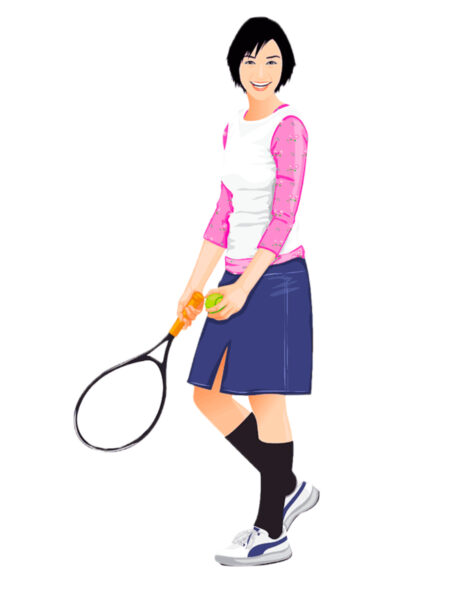
    I view romance as a game played between two people that requires a ball. Envision something like tennis or one-on-one basketball or soccer. The rules of the game are simple. There is only one ball. The ball is the exclusive property of one of the players. That player determines where, when, how and with whom the game will be played. I have never been that player. The ball always belonged to another player who controlled every aspect of the game.

    Does my ballgame analogy of love sounds bleak and unfair? Well, life is bleak and unfair if you let it be. It didn’t seem unfair in my twenties and early thirties. There were many ball owners that I wanted to play with who wanted to play with me. However, their numbers precipitously declined in my late thirties and completely vanished by my 40th birthday. For the last thirty-five years, there have been no ball owners that I wanted to play with who wanted to play with me. The game was good while lasted but it’s game over for me.

  • Depreciating Assets

    Depreciating Assets

    This is not financial advice or a sales pitch for lifestyle or financial planning resources.  I have nothing to sell. Everyone’s financial path and circumstances are different.  Not owning depreciating assets is an essential part of my path to a nomadic life style.

    Many factors affect accumulation and maintenance wealth.  Time is one of them.  Time alone can destroy some forms of wealth.  For the sake of this discussion, I define these as depreciating assets.

    Real estate is a depreciating asset because, like many asset classes, expenditures are needed to protect value.  Monies required to protect real estate values are called carrying costs.  Carrying costs are high compared to maintenance fees of other asset classes.  Carrying costs include physical maintenance, repairs, taxes, assessments, insurance, HOA memberships and broker fees.  Money spent on carrying costs could be invested in non-depreciating assets.  Real estate always depreciates net wealth.

    Real estate depreciation can be offset and sometimes exceeded by recouped housing costs, rental income and/or inflation.  Recouped housing costs are a non-starter for me because nomads, by definition, do not live in one place.  Rental income may make sense for nomads that have rental management skills they can administer at a distance.  I have no such skills.  Inflation only makes sense to me for speculation on raw land.  Raw land has lower carrying costs than developed land but raw land owners still have to deal with issues like encroachment. I have no experience or expertise in land speculation.  The deal killer, for me, for all forms of real estate is its illiquidity.

    There is no need to explore the down sides of even worse depreciating assets like automobiles, boats and such.  I am fortunate to have divested myself from the hassles, wealth loss and illiquidity of depreciating assets.  Doing so allows me greater freedom to travel anywhere in the world.  In other posts, I examine:

  • Liquidity

    Liquidity

    This is not financial advice or a sales pitch for lifestyle or financial planning resources.  I have nothing to sell. Everyone’s financial path and circumstances are different.  Financial liquidity is an essential part of my path to a nomadic life style.

    Wealth by itself does not guarantee a desired life style.  Wealth is traded for things that facilitate a life style.  Nomads need access to wealth to buy things that support their life style.  Nomadic life styles are characterized by frequent relocations and lack of a permanent residence.  Nomads’ access their wealth should not be affected by these factors.  Nomads need to access their wealth where ever they go.  Nomads’ wealth needs to be liquid to do this. 

    The definition of liquid is “flowing freely but of constant volume.”  Liquid wealth moves freely without loss of value.  All of my wealth is liquid.  My money flows freely around the world without loss of value.  It is available to me any place connected to the internet.  My wealth is linked to credit and debit cards that I use to make local purchases or cash withdrawals from ATMs.  I never pay foreign exchange or transfer fees.

    I am fortunate to have liquid asset that are sufficient and accessible to allow me to travel anywhere in the world.  In other posts, I examine:

  • No Cheese In This Fight

    No Cheese In This Fight

    No Dog At The End

    “No cheese in this fight” and “no dog at the end of this tunnel” are meant to be humorous twists on the common expressions “no cheese at the end of this tunnel” and “no dog in this fight.”  They both mean no stake in the outcome of something.  It is my attitude towards foreign cultures I visit.  I have no stake in foreign cultures other than having an enjoyable visit.

    Citizens of other cultures may love, envy or hate me.  I am just an ATM to them.  Locals’ primary interest in me is discovering the PIN that causes dollars to magically spew from my wallet.  I bear them no ill will.  I might do the same thing in their shoes.  But I am not in their shoes.  My health, wealth and American passport allow me to go where I am treated well.  People who mistreat me do not get my dollars.

    A common form of mistreatment is the mañana attitude.  Disingenuous commitments are made to deliver goods or service tomorrow, this week or next week.  Tomorrow does not mean the next calendar or work day.  Tomorrow  means someday, maybe never.  This week does not mean within seven calendar or five work days.  It means not soon, maybe never.  Next week means unknown, probably never.  Many tourists and expats feel the mañana attitude is an attempt to be agreeable.  It feeIs to me like passive aggression, deception and fraud.  The intent really doesn’t matter.  Only results count.  I don’t waste time in places where locals are unable to make and keep commitments.  I just walk away from the mañana attitude and find better treatment elsewhere.

    I really appreciate being treated well where I sleep.  At the time of this post, I had stayed in short-term rentals for more than four thousand (4,000) consecutive nights.  Most of these nights were booked through Airbnb and similar agents.  When a host mistreats me, I let them know they are subcontractors of huge multinational corporations whose mission is to provide the services I pay for.  Failure to provide adequate customer service results in poor performance ratings, less client referrals, eventual delisting and reduced profits for local hosts.  I have no stake in their business success.  It is their choice to treat me well or jeopardize their livelihood.

    More rants and raves about good and bad treatment of this old nomad.

  • Commercial Dance Studios

    Commercial Dance Studios

    I know about but not how to dance. These are impressions of an unskilled amateur dancer.

    A previous post may have left the impression that learning and executing the basic principles of lead-follow partner dancing are easy.  They are not!  Learning the principles can be very difficult.  Mastering these principles is absolutely necessary but nowhere sufficient to learn lead-follow, two-partner dancing.  It is just the  foundation.  There are many other layers to learn.  This difficulty is compounded by the learning environment that many students find themselves in . . . commercial dance studios.

    Commercial studios are not like University dance degree programs or “legitimate” dance schools.  Commercial dance studios are retail businesses selling “dance products.”  There is nothing unethical about the vast majority of dance studios.  Just like any business, they will try to sell you what they have in sock and they will always try to “up sell” you.  In a ten year period, I spent thousands of dollars at commercial dance studios and learned very little about lead-follow dancing.  But, I was a happy customer because it was a fun way to get healthy exercise and a great social experience.  

    Many commercial dance studios can teach two-partner, lead-follow dancing but you must know what it is and demand the studio teach it.  This is a bit of a “catch 22” at first.  You don’t know what you don’t know.  It is also much harder to learn lead-follow dancing than to consume the other fun and less demanding dance products offered by many  commercial studios.  Studios often discourage lead-follow dancing and some don’t offer it all because they know it will be too difficult for their clientele.  It is much easier to sell healthy exercise, fulfilling social experiences, enhanced self image and so forth.  How  do you know if you are being taught and learning the real deal?  The same way you know if you are learning any other sport.  Just do it.

    Just do it like you would if you were taking tennis lessons.  You test your skills by playing tennis with other tennis players.  It would be of no use to test your tennis skills by playing basketball.  Similarly, you can’t test your waltz skills by dancing cha cha or test lead-follow skills by doing performance choreography.  Playing tennis with players that are much more or less advanced than you is not useful.  There is no test of your skills if you can’t return a single serve of an advanced tennis opponent.  There is also no test of your skills if a less advanced player can’t return any of your serves.  Also, you cannot properly test your tennis skills with a regular partner or your teacher.  How do you know they aren’t just lobbing you easy ones to make you look and feel good. You don’t know!  The same is true of dancing.  Dancing with a variety of partners that have levels of proficiency similar to you will yield better results than dancing with only one partner or any number of partners that are much more or less proficient than you are. 

    Finding players with similar levels of proficiency is much easier for tennis and nearly every other sport than it is for dancing.  Nonetheless, if you are persistent, you can find appropriate partners and dance venues to test your lead-follow skills.  For some (not me), this will be the chaos of large social dances.  For others (me), this will be with individual or small groups of select partners in more controlled settings.

    The difficulty of finding appropriate partners is again compounded by commercial dance studios.  Social dances along with competitions and performances are products that studios sell to make money.  People buy these products for all sorts of reasons.  They have different interests in and abilities to perform all kinds of dancing.  How many will be a good match for you to test and perfect your dance skills?  Studio sponsored events work well for some but not so well for others.

    More dancing.

  • Dance Basics

    Dance Basics

    I know about but not how to dance. These are impressions of an unskilled amateur dancer.

    Dance is the physical expression of music. Musicality is the collection skills dancers use to connect to and express music.  There are many kinds of music and many kinds of dancing.  This discussion is about musicality for two-partner, lead-follow dancing.

    The most basic characteristic of partner dance music is pulse.  Pulse is an evenly spaced repetitive pattern in a musical piece that allow dance partners to coordinate their movements.  Individual pulses are often called beats and the pattern they form are often called timing.  The meanings of “beat” and “timing” are contextual.  They have different meaning for scoring music and different types of music.  For this discussion, a beat is defined as an individual pulse and timing is the pattern they form.  There are three basic types of timing: one part, two part and three part.  Beats in one part timing all sound the same.  Two part timing has repeating patterns of beats that are multiples of two.  Three part has repeating patterns of beats that are multiples of three.

    The most fundamental musicality skill for all dancers is “finding” the basic one, two or three part pulse of the music and counting the individual beats – AKA finding the beat.  There is nothing to count in one part timing as all the beats sound the same.  Its simplicity lends itself to freestyle non-partnered, self expression.  However, lack of fixed musical reference points does not lend it to synchronization of partners movements needed for lead-follow dancing.

    Synchronization to the music is first and most fundamental way partners connect to the music and to each other.  Dancers must be able to find the basic two or three beat pulse of the music and count the beats.  There are more complex ways to express and count timing known as measures and phrases but they are all logical groupings of two or three beats.  Understanding measures and phrases allows advanced dancers to express music in more complex, subtle and individualistic ways.   But, the most fundamental musicality skill is finding and correctly counting the basic two or three beat pulse.

    Correctly counting the beat requires “finding the one.”  There is always a musically identifiable “one” beat followed by the rest of the count.  It doesn’t matter if the timing is counted as two or three beats or more complex measures and phrases.  There is always a “one” followed by the rest of the count.

    Many but not all dances take the first step on the “one.”   For dances that start on beats other than “one,” it is still necessary to find the “one” and count to the required starting beat.  Finding the “one” is an acquired skill.  It takes practice, listening to many hours of music, training and tutorship.  “Finding the one” and correctly counting the beat is the second most fundamental way partners connect to the music and to each other.

    The third key to partner dancing to music is rhythm.  Timing tells dance parters when to move to the music.   Rhythm tells them how to move to the music.  More specifically, how to coordinate their foot movements.  Each dance style has characteristic and often complex foot movements.  Different types of music lend themselves to different dance styles that often have multiple rhythms.  In the present context, rhythm is the characteristic step pattern(s) of a dance style not an attribute the music per se.

    The most basic step pattern is just taking a step on every beat.  This is called single step rhythm.  Merengue and basic waltz are two such dances.  Merengue is usually danced to fast two-beat music and waltz to slow three-beat music.  There are numerous other differences between merengue and basic waltz but both dances have the same rhythm.  They both take a single step on each beat.

    There are many rhythms other than single step.  These rhythms are created by combinations of: taking one step per beat, taking one step for every two beats and taking two steps on one beat.  The latter case is further complicated by breaking beats into halves, thirds, quarters or other fractals and stepping on a particular half, third, quarter or other fractal beat.  Even greater rhythmic complexity arrises when similar or identical step patterns are executed to different timing counts.  The third basic key to partners connecting to the music and each other is understanding and properly executing the rhythm(s) of the dance style being done.

    The opposite of musical connection is getting “lost” in the music.  That is, not knowing when to start and/or when and how to take steps.  Waltz and merengue are very different dances but the process of not getting lost in the music is the same: find the beat, determine the timing, find the “one” and then apply the rhythm of the dance you are trying to do.  Waltz is one of a few dances done to three count music.  If the music has a slow three beat pulse, it is probably a waltz.  Basic waltz is just taking a step on each beat.  American style waltz, like many (but not all) dances, starts on “one” with the lead partner taking the first step forward with the left foot and the following partner with the right foot backward.

    The case for merengue is more complicated than waltz because the vast majority of dance music has a two beat pulse.   Many different dance styles can be danced to the same two count music.  Each of these styles are differentiated, in part, by different rhythms.  The choice of what dance style to do is determined by a variety of factors.  Choosing which dance to do comes with experience.  Dancers develop a “feel” for the kind of dance that fits a particular piece of music.  The important thing is for both partners to know and execute the proper timing and rhythm(s) of the dance being done.  Merengue is very versatile and can be danced to much two count music because of the simple single step rhythm.  One finds the pulse and steps on every beat.  Like waltz, merengue starts on “one” with the lead partner taking the first step with the left foot and the following partner with the right foot.

    A note about dance terms.  Dance nomenclature has many roots and traditions resulting in terminology that is often confusing and seemingly contradictory.  For example, “merengue” is often the name given to a specific style of single step dancing done with characteristic patterns to a specific genera of two count latin music.  There are other types of single step dancing like that have characteristic styles and patterns that are done to other genera of two count music.  Single step rhythm is sometimes called “four count swing” when done to swing or disco music.  Another common example of confusing dance terms are “timing” and “rhythm.”  They are often used interchangeably to describe elements of music and/or dance style.  I use “timing” to describe the time signature of the music as read by musicians playing the music would or a dancer counting the pulse (aka beats) would.  Rhythm is the pattern of foot and other body movements coordinated to the timing,  There are many such examples of confusing, redundant and conflicting dance terms.  Dancer’s should not get hung up on this trivia.  It doesn’t matter what names are used for a dance, music or their elements.  Focus on the basic principles: 1) find the pulse of the music (timing aka beat), 2) find the “one” and count the beat, and 3) correctly execute the foot pattern(s) (rhythm) of the dance you are trying to do.

    More beginner dance basics.
  • Recovered

    Recovered

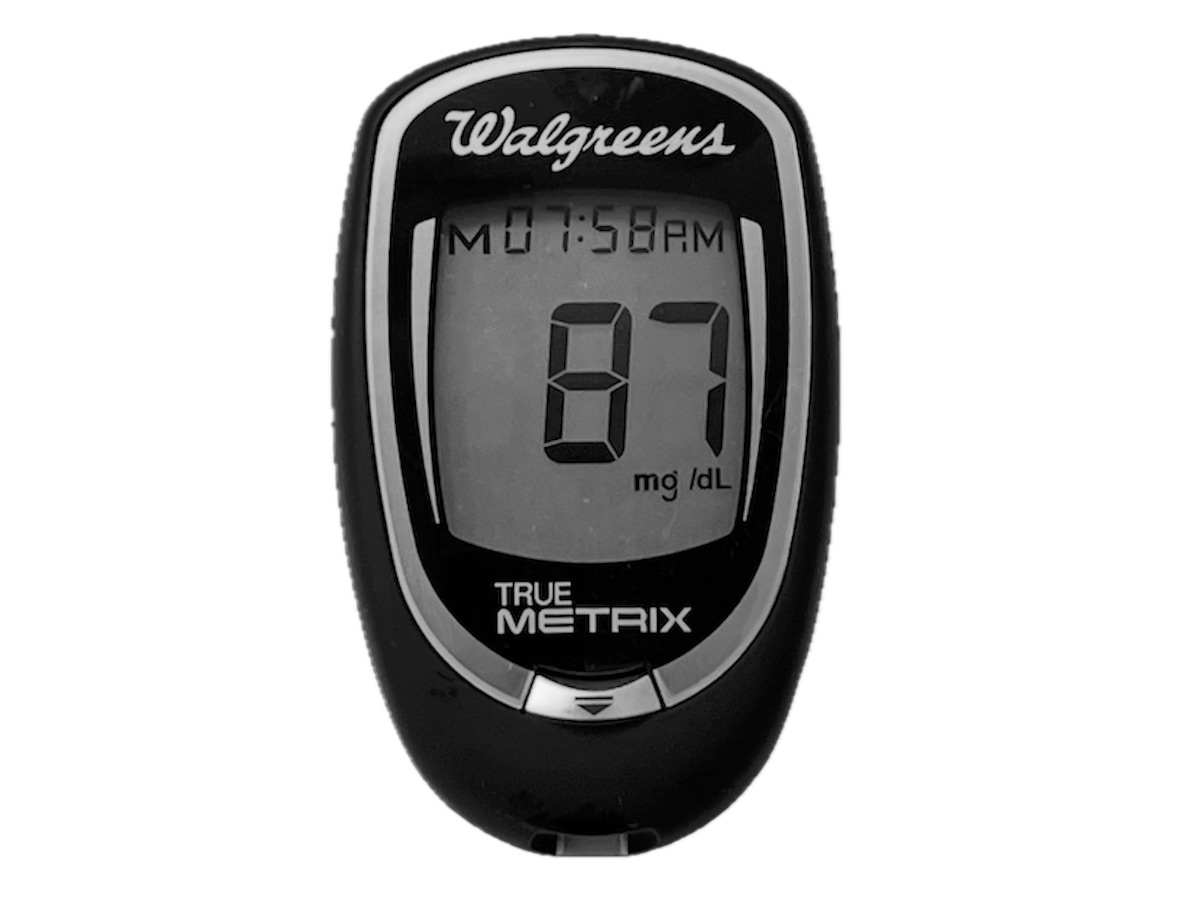
    I am a recovered diabetic.  A few months ago I found out I had full blown type 2 diabetes.  I began cutting back on eating carbohydrates (carbs).  I experimented with intermittent fasting and restricted caloric intake from 0 to 1800 calories per day.  In two weeks I was down to less than 30 grams of carbs per day and my blood chemistry normalized.  I easily lost 50 pounds (23 kg) in the first two months on 1200 to 1500 calories per day.  It was too fast.  I have slowed weight reduction and am working on building endurance, muscle mass and hopefully resorb the folds of skin hanging all over my body.  I am currently low-card, one meal a day (OMAD), 1800 calories per day. 

    I have similar stories of being recovered from other forms of self abuse.  It has always been the same story.  It does not matter if it’s sugar, dysfunctional relationships, materialism or heroin.  One day I realized that too much was never enough.  Going cold turkey was not always easy but I have never relapsed.  I have never fallen off the wagon or looked up an old flame.  When I am done, I am done and never look back.  That is why I say “recovered” and not “recovering.”

    “Recovering” implies an inability to control an addictive personality/physiology as if it is a genetic defect or being trapped in a dysfunctional culture, suffering severe trauma, cancer and so forth.  It does not matter the cause.  A way must be found to overcome situational adversity and personal weakness.  Am I morally superior or just lucky to have the right body chemistry and have access to resources to escape misery?  I don’t know and don’t care.  I just know I have always recovered.  Will I always?  No, someday I will be destroyed by adversity and everyone dies.  Until then, I am recovered and moving forward.

  • Human Value

    Human Value

    Why do I value other humans?  It Is not the income, infrastructure, goods and services they provide me.  These are impersonal exchanges of things.  There is nothing innately human about them.  I value others for the emotional and intellectual sustenance they provide for a full life.

    I am told my social needs are abnormality minimal. I have no family, significant other or pets.  I have fond feelings for people and places but I call no place home.  Social media has no appeal.

    Although my needs for human interaction may appear minimal they do not feel minimal.  People are important.  People category posts are about how and with whom this old nomad enriches his life.