Category: Health

  • Keto Friendly Markets

    Keto Friendly Markets

    This post is about choosing slow travel destinations with Keto Friendly Markets.

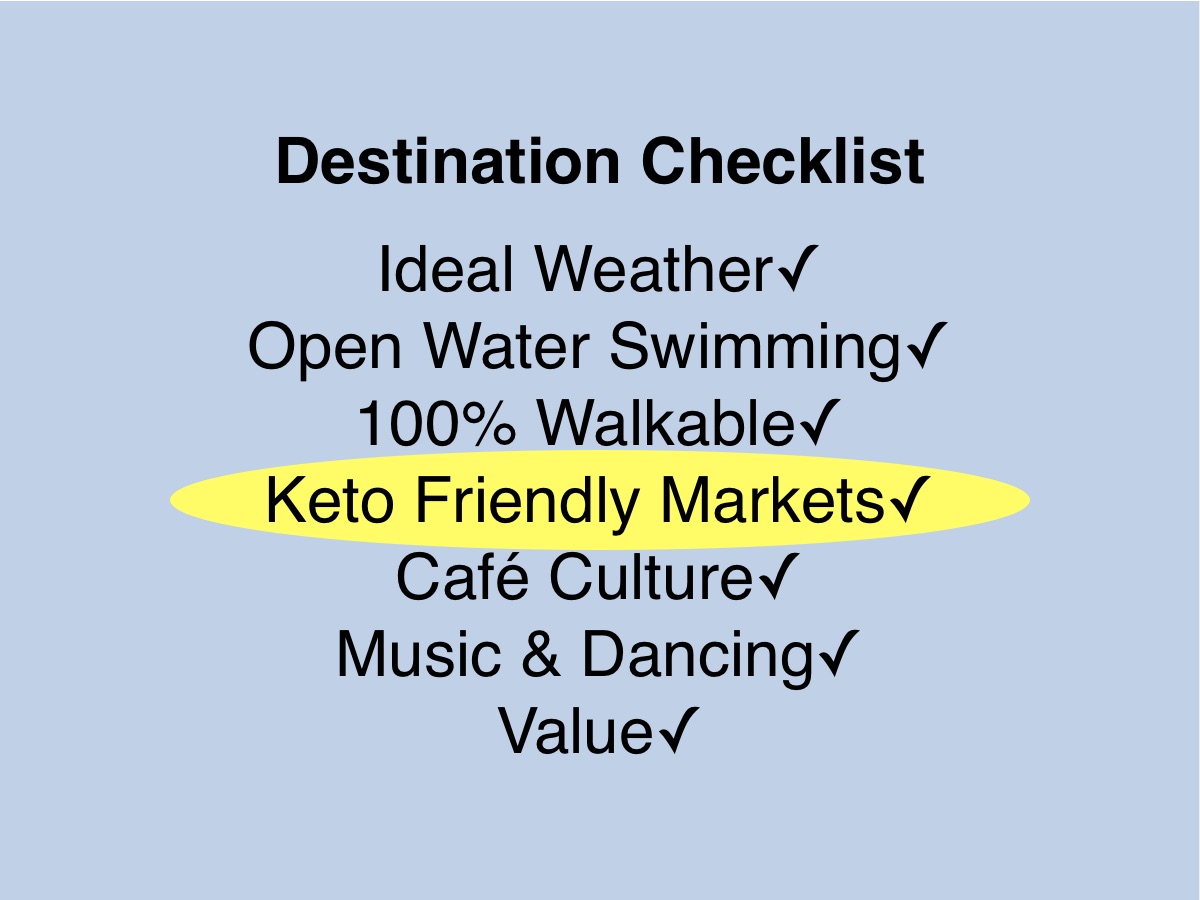
    Keto Friendly Markets is one of seven categories on my Destination Checklist.

    Keto Friendly Markets became an absolute necessity at the age of 76 when I was diagnosed with type 2 diabetes.  I was miserably obese and every inch of my body was racked by debilitating inflammation. I began experimenting with a low carbohydrate and intermittent fasting diets sourced from Keto Friendly Markets.  My health rapidly improved.  

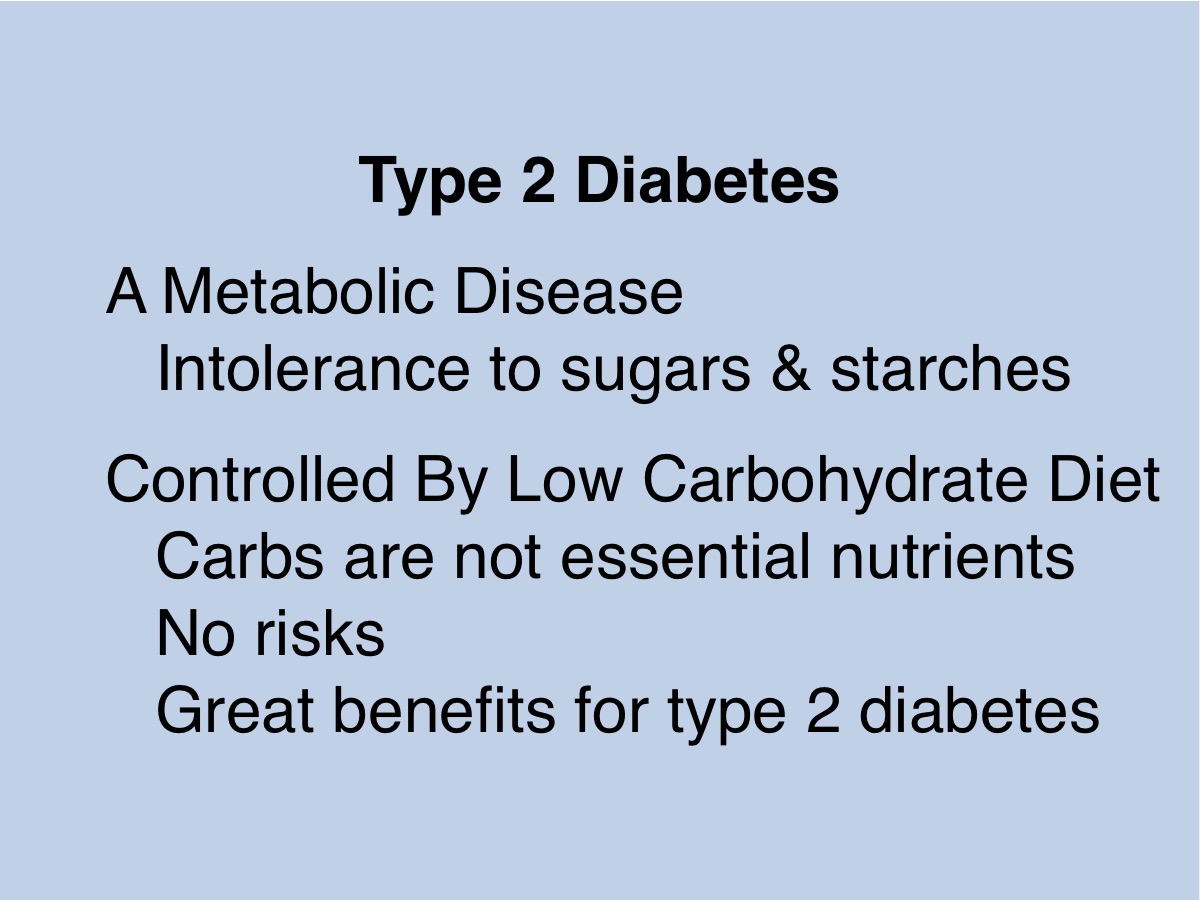
    Everyone’s health and approach to health care and diet are unique.  There are many types of dietary diseases and treatments.  I am fortunate to not suffer from alcoholism, lactose intolerance, celiac disease, nut allergies or any of the many other types of metabolic and immunologic diseases related to diet.   My body simply cannot tolerate dietary sugars and starches.  I am fortunate that there is a simple cure – not eating sugars and starches.  I am fortunate that carbohydrates are not essential nutrients.  I am fortunate there are no risks and great benefits from not eating sugars and starches just as there are no risks and great benefits to not consuming alcohol for alcoholics, gluten for celiac disease and so forth.

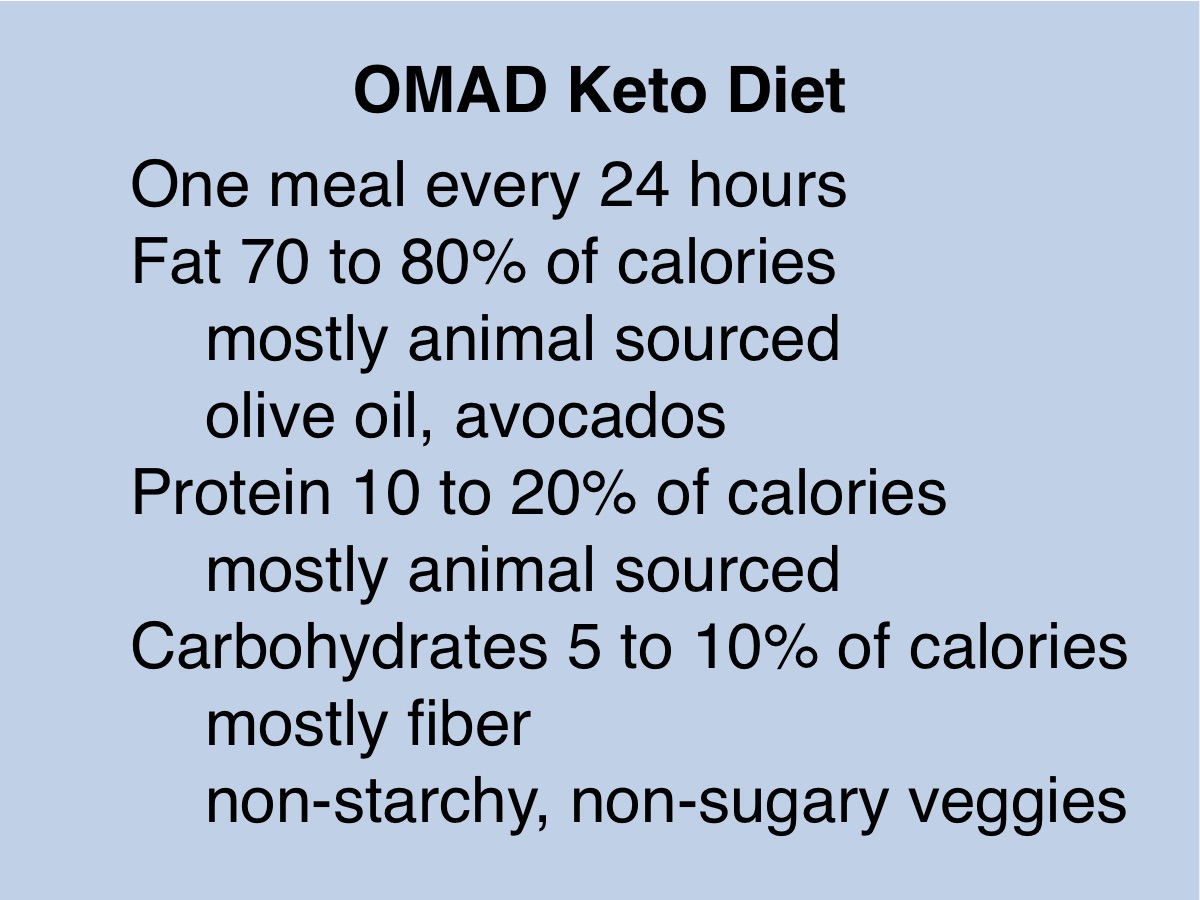
    These are many names and definitions for low carbohydrate diets and intermittent fasting.  I just say my diet is OMAD Keto.  OMAD stands for one meal a day (every 24 hours).  Keto is short for ketogenic which I define as a caloric content of 70 to 80% fat, 10 to 20% protein and 5 to 10% carbohydrates.  Most of the fat and protein are animal sourced from fish, butter, cheese, chicken (skin on), pork, beef, and eggs.  Major exceptions are fat from olive oil and avocados. Carbohydrates are mostly fiber from non-starchy and non-sugary plants like broccoli, spinach, cauliflower, cabbage, peppers, avocados and some types of nuts.

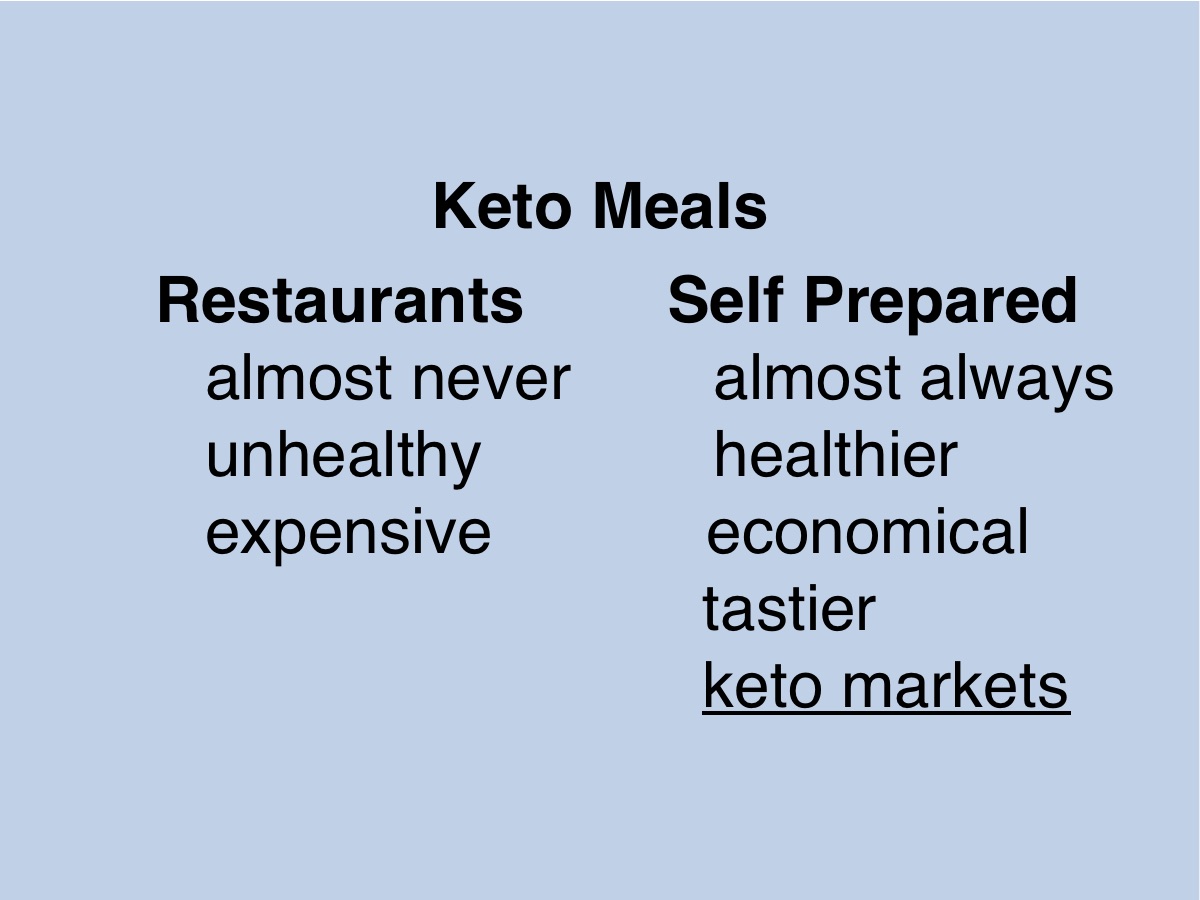
    I prepare nearly every meal and rarely eat out because I am a far better cook than most restaurants whose food is universally unhealthy and expensive.  My cooking ingredients are sourced from Keto Friendly Markets that I define as having abundant varieties of high quality animal products, olive oil and non-starchy vegetables.  I always book slow travel accommodations with adequate cooking facilities that are within easy walking distance of Keto Friendly Markets.

    My OMAD keto diet sourced from Keto Friendly Markets is a vital part of a slow travel lifestyle that works well for me in my late seventies.  I am confident it will continue working well into the future.

    In other posts, I present in-depth explanations of the other six categories on my Destination Checklist.

    Please submit questions, comments and suggestions about slow travel and nomad living beyond 70.

  • Swim Club

    Swim Club

    Swim Club

    Who

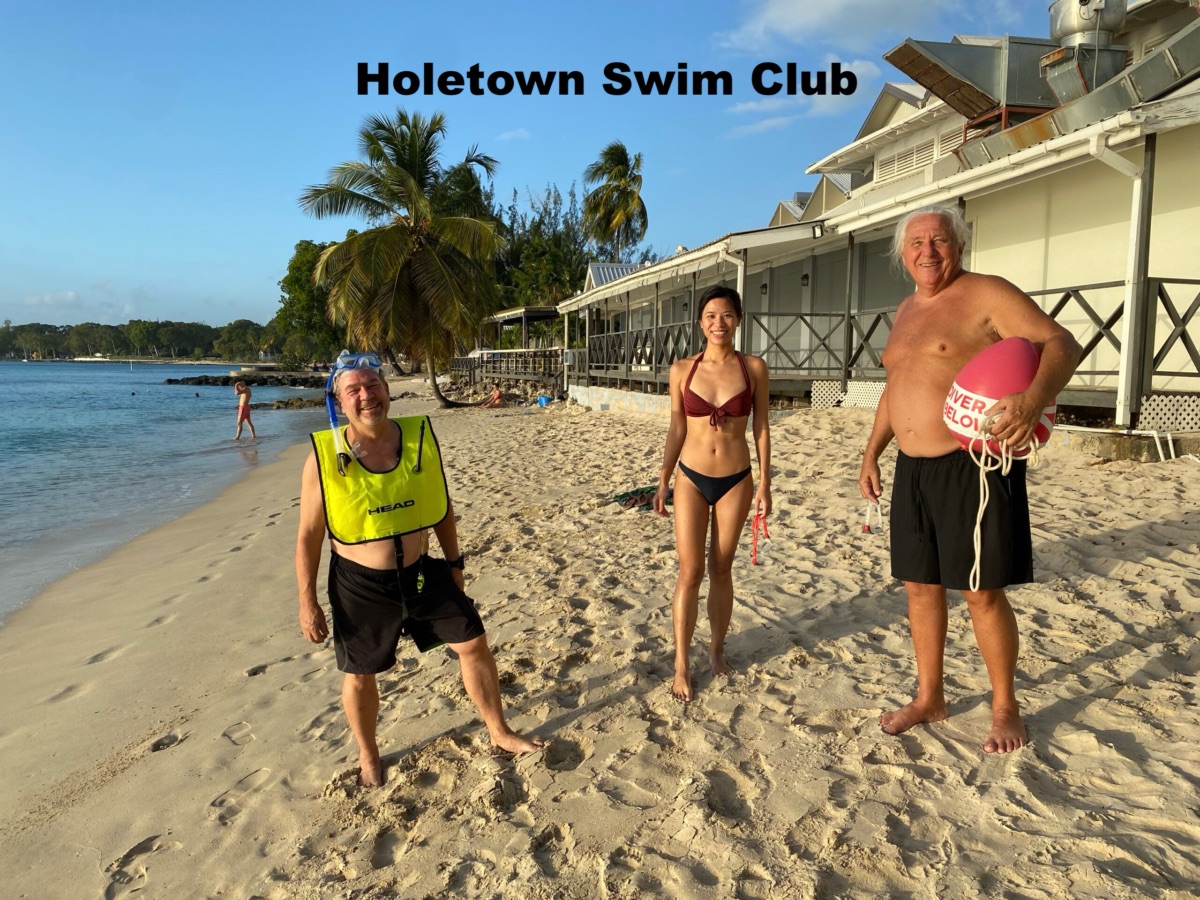
    Anyone comfortable crossing the surf line and swimming in open water.

    Where

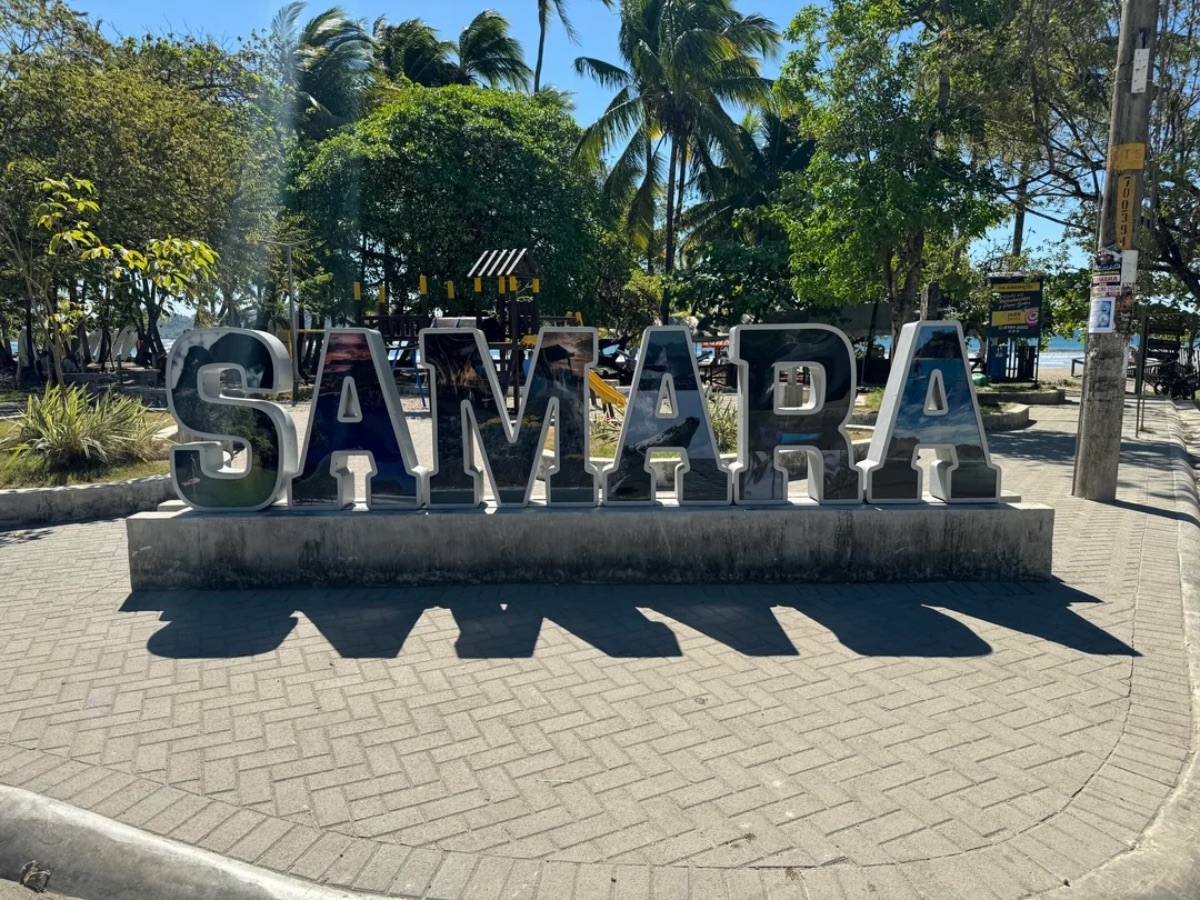
    We meet near the Sámara sign at the beach end of Via Arriba.

    When

    The Swim Club meets every morning at 06:30.

    Venue

    • Oval shape venue with 1,800 m east/west by 1,200 m north/south axes.
    • Northern entirely points along 2,400 m gently sloping grey sand beach.
    • SW and SE ends bounded by rocky outcrops and reefs.
    • Southern exposure to open Pacific Ocean.
    • No detectable currents in north half beyond the surf line.
    • Tidal currents among southern reefs.
    • Tidal range can exceed 3 m (9.8 ft).

    Conditions

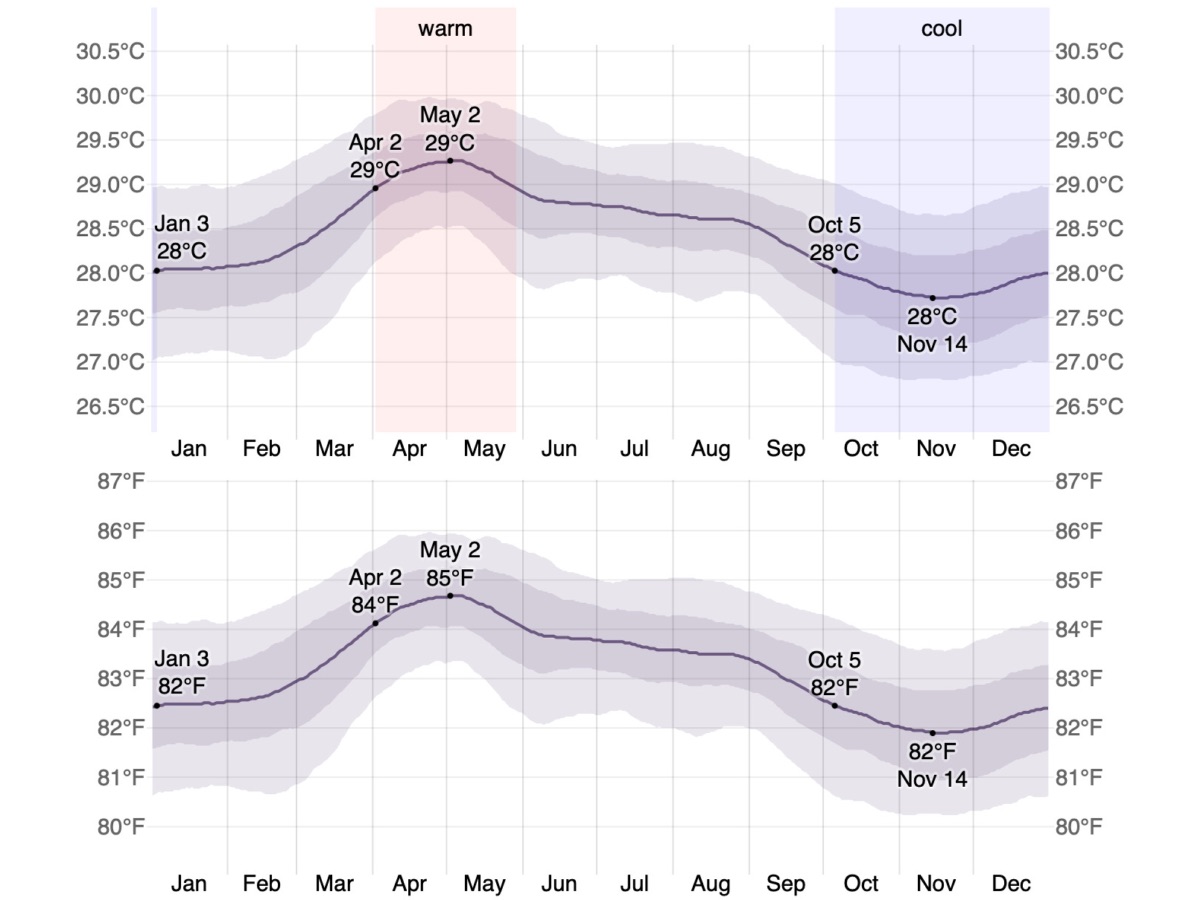
    • Best swimming is during dry season mid-December to mid-April.
    • Torrential rain during wet season washes enormous amounts of flotsam into the bay.
    • Under water visibility can be good (10 m, 33 ft) to poor depending on surf stirring up fine sand.
    • Minimal hazardous wild life: occasional invisible stingers, sting rays, red tide.
    • No sharks or crocodiles!
    • Very few powered water craft!
    • Entry is easier at low tide when surf is blocked by outer reefs.
    • “Surf shadows” created by reefs at east and west ends make entry and exit easier when surfers are smiling.

    Courses

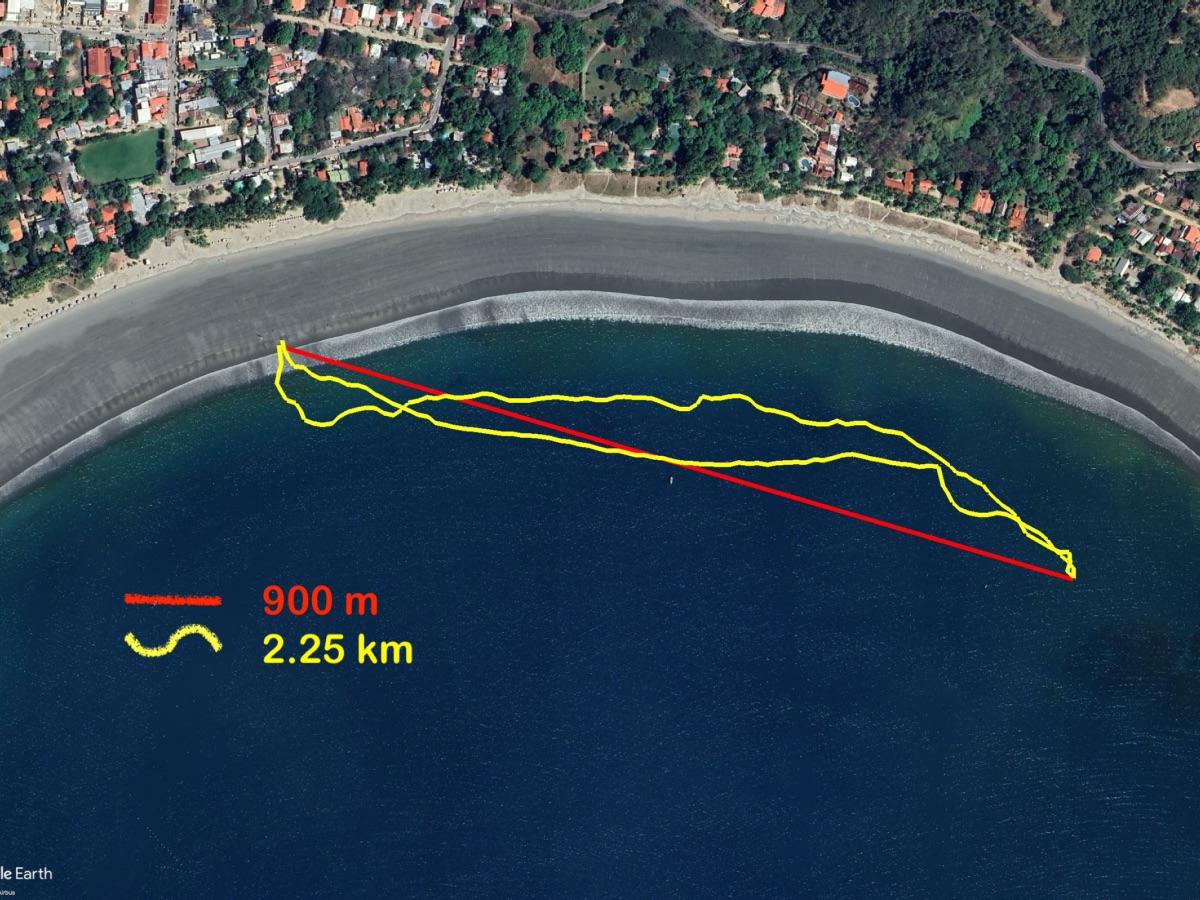
    There are several fixed marks in the bay. One is a yellow buoy approximately 900 meters from the start (red line). Swimming most of the way parallel to the beach allows swimmers to easily return to shore and walk back. The yellow line is the GPS track of a typical 2.25 km (1.4 mile) swim.

    What

    To bring

    Swimming googles.

    To not bring

    Any valuables larger than a cellphone that will be left unattended on the beach. Cell phones, wallets and a few other small items can be towed in swim buoy dry bags.

    Optional

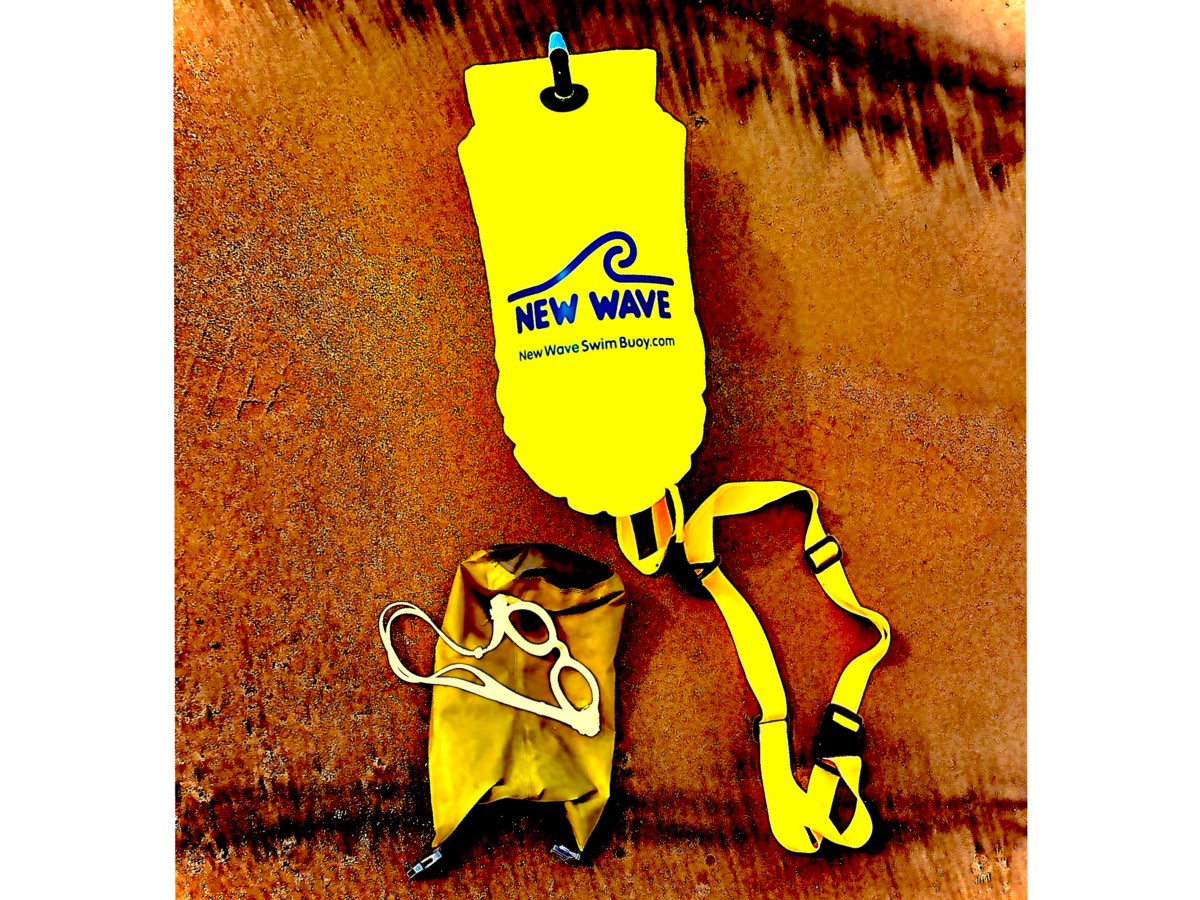
    Rash guard, fins, snorkel, towable swim buoy, wearable dry sack . . .

  • More Beginner Dance Basics

    More Beginner Dance Basics

    I know about but not how to dance. These are impressions of an unskilled amateur dancer.

    As discussed in a previous post, the most basic dance skills required to physically express music are: identifying the pulse, finding the “one”, counting the beat and performing rhythmic body movements coordinated with the beat. Specific neural-muscular pathways are required that are different from most common activities. My biggest obstacle was the lack of these neural-motor skills necessary for dancing. This was clearly illustrated to me when a dance instructor asked me to listen to and vocally count simple dance music. My musicality was sufficiently developed at that time to accurately count the music with my voice. The instructor then asked to simultaneously tap my finger to the count without looking at my hand. I was then asked to look at my finger tapping while still counting out loud. There was absolutely no correlation between my verbal counting and my finger tapping. It was evident that I could correctly hear and verbally count simple dance music but the neural pathway from my ears to my finger was not adequately developed. The same result occurred when I was asked to tap my foot in time with the music. How could I expect to physically express music with my whole body (aka dance) if I could not perform the simple and most basic activity of tapping my finger or foot to the music’s pulse? The answer is training.

    All dancers use training exercises to develop and improve neural pathways that connect their body movements to the music. It is difficult for novice dancers to learn these techniques on their own. They are often taught them by dance instructors. To succeed, instructors need special teaching skills that, unfortunately, many do not have. The instructor’s bodies “speak the language” of dance but they are unable to communicate to novice dancers whose bodies “speak other languages.” Some “body language”crossover exists between dance and activities like gymnastics but little with every day activities like office work or driving a car. Dance movements are completely alien to many novice dancers like me. On the other hand, dance teachers often grew up with music, dancing or dance-related activities. It is their native body language. It is “in their blood.” They often feel naturally gifted and are arrogant and condescending to novice dancers like me. Having these teachers say “just listen to and move to the beat” meant nothing to me. I had to rely on other training techniques to develop neural-muscular pathways connecting my body to dance music.

    Musicians and dancers use all sorts of visual and auditory techniques to help them internalize musical structure. Pianists use metronomes to learn to play sheet music on time, ballerinas practice to taps of the master’s stick and conductors coordinate orchestral elements with their wands. My technique is to use computer apps like Audacity.app to simultaneously watch visual wave forms of the music while listening and moving my body to it.

    Watching wave forms to connect to music begins with visually identifying and vocally counting the primary pulses of the shortest repeating musical pattern. These pulses will always fall into repetitious patterns of either a single sound (single-count) or dissimilar sounds in multiples of two (two-count, “1 2”, “1 2 3 4”, etc) or three (three-count, ”1 2 3”, “1 2 3 4 5 6”, etc) The next step is to coordinate body movements to the vocal counting. The goal is internalize the basic musical structure into neural-muscular pathways (aka “muscle memory”) so that the body can eventually make specific movements exactly timed to the pulses without relying on external cues or counting.
    The most important fundamental body movement to the pulse are foot steps appropriate to the type of dance. Start with simple two- and three-count dancing with steps on every pulse. Good examples are merengue and waltz to, respectively, simple two- and three-count music. More advanced dancers will count and step to the pulses of longer and more complex “phrases” constructed repeating two- or three-count pieces. They may count, step and make other body movements not only on the major pulses but also on places in the music appropriate to the dance style, rhythm and individual expression of the music.

    An example a more advanced dance style is salsa “danced on the one.” The shortest repeating pattern is eight pulses. The leader’s basic pattern begins by stepping with the left foot on “1”, right foot on “2”, left foot on “3”, no step on “4”, right foot on “5”, left foot on “6”, right foot on “7”, no step on “8” and repeat. Beginner dancers may start by counting every pulse as “1”, “2”, “3”, “hold”, “5”, “6”, “7”, “hold” until they can confidentially step and hold with the correct foot on the correct pulse. The count can gradually be simplified to counting just the stepping pulses “1”, “2”, “3”, “5”, “6”, “7” or “quick”, “quick”, “slow.” The count may be further simplified to the “1” and “5”, just the “1” or no counting at all. The important thing to remember is every level of dancer consciously or unconsciously counts the music. Every level of dancer sometimes gets “lost” in the music and has to feel and count the pulses and find the “one” to get back “on” the music.

  • Low Carb Diet

    Low Carb Diet

    This is not medical advice or a sales pitch for health care resources.  I have no advice to give or sell.  Everyone’s health and approach to health care are unique.  These are my opinions and approach to my health care.

    Keto, Atkins, low-carb, carnivore and paleo are variations of the same thing – cutting down on the consumption of specific types of simple and complex carbohydrates known as sugars and starches.  Sugars and starches are NOT essential dietary requirements.  There is NO evidence that they are a part of a “natural” human diet because there is NO evidence that humans evolved on diets containing significant amounts of sugars and starches.  There is a plethora of evidence suggesting significant consumption of sugars and starches is a relatively modern phenomenon that human genetic evolution has not fully “caught up” to.

    Two classic examples of diet-related variations in human evolution are ethanol and lactose intolerance.  There are large populations of humans that have genes that allow them to process ethanol and lactose with relatively little or no harm.  There are huge populations of humans (literally billions) that lack the genes to allow them to safely process lactose and ethanol.  Alcoholism and lactose intolerance are very real and serious dietary diseases for billions of people that can be cured by simply not consuming alcohol and certain dairy products. 

    There are many types of dietary diseases.  I am fortunate to not suffer from alcoholism, lactose intolerance, celiac disease, nut allergies or any of the many other types of metabolic and immunologic diseases related to diet.  Unfortunately, I lost the genetic lottery for type 2 diabetes.  My body cannot tolerate diets containing sugar or starches.  I am fortunate that they are NOT essential nutrients.  I am fortunate that, for me, there is a simple cure – not eating sugars and starches.  I am fortunate there are NO risks and only benefits from not eating sugars and starches just as there are NO risks and only benefits to not consuming alcohol for alcoholics, gluten for celiac disease and so forth.

    I am also fortunate that I tolerate a third type of carbohydrate called fiber.  There are some unfortunate people that don’t.  I am lucky.  I can eat as much as I want of all the non-starchy and non-sugary plant products like broccoli, spinach, cauliflower, cabbage,  peppers, yummy avocados and some nuts and berries.  This is in addition to all the delicious fat and protein rich animal products: fish, butter, cheese, Greek yogurt, chicken, pork, beef and eggs.  I wish I had the genes that allowed me to enjoy pasta, pizza, bread, ice cream and bananas but there is absolutely NO risk and immense benefit to me not eating them.

  • Commercial Dance Studios

    Commercial Dance Studios

    I know about but not how to dance. These are impressions of an unskilled amateur dancer.

    A previous post may have left the impression that learning and executing the basic principles of lead-follow partner dancing are easy.  They are not!  Learning the principles can be very difficult.  Mastering these principles is absolutely necessary but nowhere sufficient to learn lead-follow, two-partner dancing.  It is just the  foundation.  There are many other layers to learn.  This difficulty is compounded by the learning environment that many students find themselves in . . . commercial dance studios.

    Commercial studios are not like University dance degree programs or “legitimate” dance schools.  Commercial dance studios are retail businesses selling “dance products.”  There is nothing unethical about the vast majority of dance studios.  Just like any business, they will try to sell you what they have in sock and they will always try to “up sell” you.  In a ten year period, I spent thousands of dollars at commercial dance studios and learned very little about lead-follow dancing.  But, I was a happy customer because it was a fun way to get healthy exercise and a great social experience.  

    Many commercial dance studios can teach two-partner, lead-follow dancing but you must know what it is and demand the studio teach it.  This is a bit of a “catch 22” at first.  You don’t know what you don’t know.  It is also much harder to learn lead-follow dancing than to consume the other fun and less demanding dance products offered by many  commercial studios.  Studios often discourage lead-follow dancing and some don’t offer it all because they know it will be too difficult for their clientele.  It is much easier to sell healthy exercise, fulfilling social experiences, enhanced self image and so forth.  How  do you know if you are being taught and learning the real deal?  The same way you know if you are learning any other sport.  Just do it.

    Just do it like you would if you were taking tennis lessons.  You test your skills by playing tennis with other tennis players.  It would be of no use to test your tennis skills by playing basketball.  Similarly, you can’t test your waltz skills by dancing cha cha or test lead-follow skills by doing performance choreography.  Playing tennis with players that are much more or less advanced than you is not useful.  There is no test of your skills if you can’t return a single serve of an advanced tennis opponent.  There is also no test of your skills if a less advanced player can’t return any of your serves.  Also, you cannot properly test your tennis skills with a regular partner or your teacher.  How do you know they aren’t just lobbing you easy ones to make you look and feel good. You don’t know!  The same is true of dancing.  Dancing with a variety of partners that have levels of proficiency similar to you will yield better results than dancing with only one partner or any number of partners that are much more or less proficient than you are. 

    Finding players with similar levels of proficiency is much easier for tennis and nearly every other sport than it is for dancing.  Nonetheless, if you are persistent, you can find appropriate partners and dance venues to test your lead-follow skills.  For some (not me), this will be the chaos of large social dances.  For others (me), this will be with individual or small groups of select partners in more controlled settings.

    The difficulty of finding appropriate partners is again compounded by commercial dance studios.  Social dances along with competitions and performances are products that studios sell to make money.  People buy these products for all sorts of reasons.  They have different interests in and abilities to perform all kinds of dancing.  How many will be a good match for you to test and perfect your dance skills?  Studio sponsored events work well for some but not so well for others.

    More dancing.

  • Dance Basics

    Dance Basics

    I know about but not how to dance. These are impressions of an unskilled amateur dancer.

    Dance is the physical expression of music. Musicality is the collection skills dancers use to connect to and express music.  There are many kinds of music and many kinds of dancing.  This discussion is about musicality for two-partner, lead-follow dancing.

    The most basic characteristic of partner dance music is pulse.  Pulse is an evenly spaced repetitive pattern in a musical piece that allow dance partners to coordinate their movements.  Individual pulses are often called beats and the pattern they form are often called timing.  The meanings of “beat” and “timing” are contextual.  They have different meaning for scoring music and different types of music.  For this discussion, a beat is defined as an individual pulse and timing is the pattern they form.  There are three basic types of timing: one part, two part and three part.  Beats in one part timing all sound the same.  Two part timing has repeating patterns of beats that are multiples of two.  Three part has repeating patterns of beats that are multiples of three.

    The most fundamental musicality skill for all dancers is “finding” the basic one, two or three part pulse of the music and counting the individual beats – AKA finding the beat.  There is nothing to count in one part timing as all the beats sound the same.  Its simplicity lends itself to freestyle non-partnered, self expression.  However, lack of fixed musical reference points does not lend it to synchronization of partners movements needed for lead-follow dancing.

    Synchronization to the music is first and most fundamental way partners connect to the music and to each other.  Dancers must be able to find the basic two or three beat pulse of the music and count the beats.  There are more complex ways to express and count timing known as measures and phrases but they are all logical groupings of two or three beats.  Understanding measures and phrases allows advanced dancers to express music in more complex, subtle and individualistic ways.   But, the most fundamental musicality skill is finding and correctly counting the basic two or three beat pulse.

    Correctly counting the beat requires “finding the one.”  There is always a musically identifiable “one” beat followed by the rest of the count.  It doesn’t matter if the timing is counted as two or three beats or more complex measures and phrases.  There is always a “one” followed by the rest of the count.

    Many but not all dances take the first step on the “one.”   For dances that start on beats other than “one,” it is still necessary to find the “one” and count to the required starting beat.  Finding the “one” is an acquired skill.  It takes practice, listening to many hours of music, training and tutorship.  “Finding the one” and correctly counting the beat is the second most fundamental way partners connect to the music and to each other.

    The third key to partner dancing to music is rhythm.  Timing tells dance parters when to move to the music.   Rhythm tells them how to move to the music.  More specifically, how to coordinate their foot movements.  Each dance style has characteristic and often complex foot movements.  Different types of music lend themselves to different dance styles that often have multiple rhythms.  In the present context, rhythm is the characteristic step pattern(s) of a dance style not an attribute the music per se.

    The most basic step pattern is just taking a step on every beat.  This is called single step rhythm.  Merengue and basic waltz are two such dances.  Merengue is usually danced to fast two-beat music and waltz to slow three-beat music.  There are numerous other differences between merengue and basic waltz but both dances have the same rhythm.  They both take a single step on each beat.

    There are many rhythms other than single step.  These rhythms are created by combinations of: taking one step per beat, taking one step for every two beats and taking two steps on one beat.  The latter case is further complicated by breaking beats into halves, thirds, quarters or other fractals and stepping on a particular half, third, quarter or other fractal beat.  Even greater rhythmic complexity arrises when similar or identical step patterns are executed to different timing counts.  The third basic key to partners connecting to the music and each other is understanding and properly executing the rhythm(s) of the dance style being done.

    The opposite of musical connection is getting “lost” in the music.  That is, not knowing when to start and/or when and how to take steps.  Waltz and merengue are very different dances but the process of not getting lost in the music is the same: find the beat, determine the timing, find the “one” and then apply the rhythm of the dance you are trying to do.  Waltz is one of a few dances done to three count music.  If the music has a slow three beat pulse, it is probably a waltz.  Basic waltz is just taking a step on each beat.  American style waltz, like many (but not all) dances, starts on “one” with the lead partner taking the first step forward with the left foot and the following partner with the right foot backward.

    The case for merengue is more complicated than waltz because the vast majority of dance music has a two beat pulse.   Many different dance styles can be danced to the same two count music.  Each of these styles are differentiated, in part, by different rhythms.  The choice of what dance style to do is determined by a variety of factors.  Choosing which dance to do comes with experience.  Dancers develop a “feel” for the kind of dance that fits a particular piece of music.  The important thing is for both partners to know and execute the proper timing and rhythm(s) of the dance being done.  Merengue is very versatile and can be danced to much two count music because of the simple single step rhythm.  One finds the pulse and steps on every beat.  Like waltz, merengue starts on “one” with the lead partner taking the first step with the left foot and the following partner with the right foot.

    A note about dance terms.  Dance nomenclature has many roots and traditions resulting in terminology that is often confusing and seemingly contradictory.  For example, “merengue” is often the name given to a specific style of single step dancing done with characteristic patterns to a specific genera of two count latin music.  There are other types of single step dancing like that have characteristic styles and patterns that are done to other genera of two count music.  Single step rhythm is sometimes called “four count swing” when done to swing or disco music.  Another common example of confusing dance terms are “timing” and “rhythm.”  They are often used interchangeably to describe elements of music and/or dance style.  I use “timing” to describe the time signature of the music as read by musicians playing the music would or a dancer counting the pulse (aka beats) would.  Rhythm is the pattern of foot and other body movements coordinated to the timing,  There are many such examples of confusing, redundant and conflicting dance terms.  Dancer’s should not get hung up on this trivia.  It doesn’t matter what names are used for a dance, music or their elements.  Focus on the basic principles: 1) find the pulse of the music (timing aka beat), 2) find the “one” and count the beat, and 3) correctly execute the foot pattern(s) (rhythm) of the dance you are trying to do.

    More beginner dance basics.

  • Recovered

    Recovered

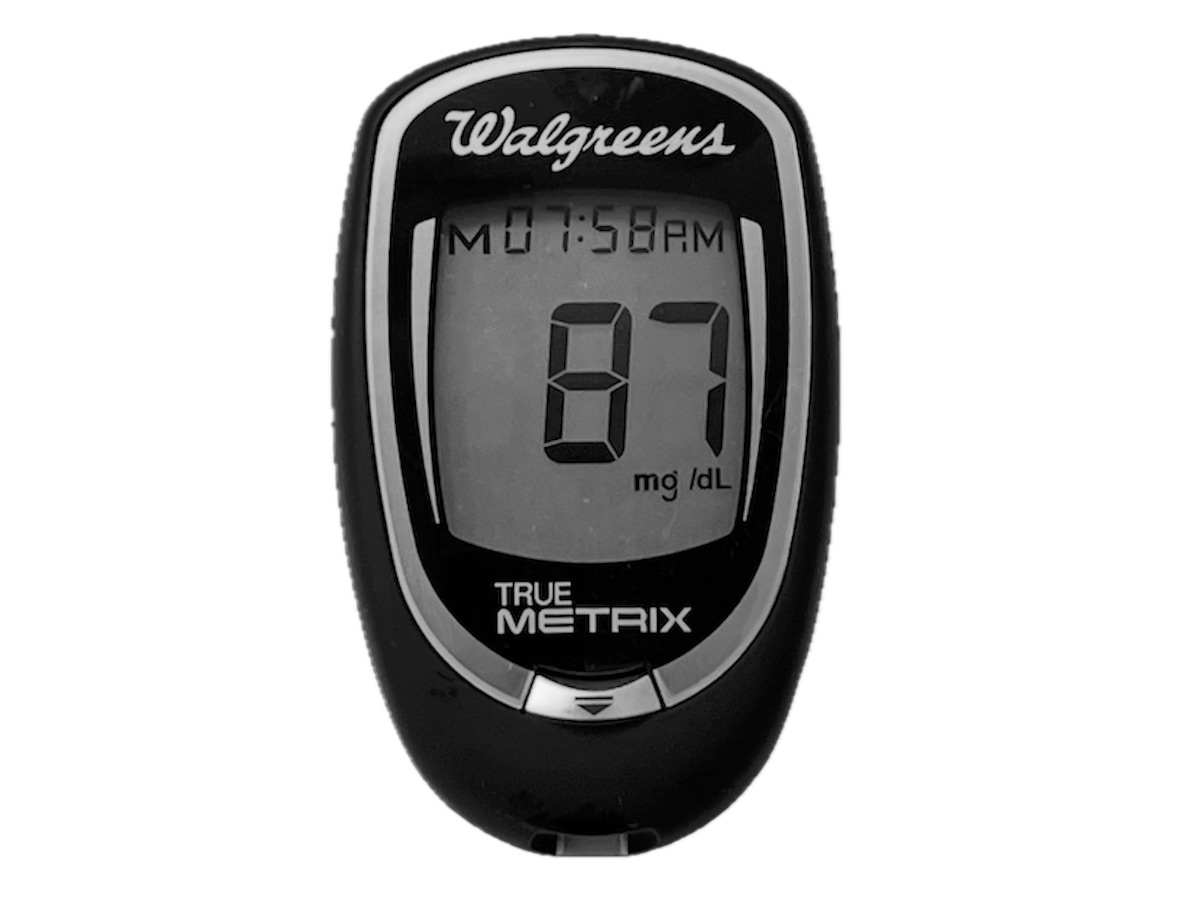
    I am a recovered diabetic.  A few months ago I found out I had full blown type 2 diabetes.  I began cutting back on eating carbohydrates (carbs).  I experimented with intermittent fasting and restricted caloric intake from 0 to 1800 calories per day.  In two weeks I was down to less than 30 grams of carbs per day and my blood chemistry normalized.  I easily lost 50 pounds (23 kg) in the first two months on 1200 to 1500 calories per day.  It was too fast.  I have slowed weight reduction and am working on building endurance, muscle mass and hopefully resorb the folds of skin hanging all over my body.  I am currently low-card, one meal a day (OMAD), 1800 calories per day. 

    I have similar stories of being recovered from other forms of self abuse.  It has always been the same story.  It does not matter if it’s sugar, dysfunctional relationships, materialism or heroin.  One day I realized that too much was never enough.  Going cold turkey was not always easy but I have never relapsed.  I have never fallen off the wagon or looked up an old flame.  When I am done, I am done and never look back.  That is why I say “recovered” and not “recovering.”

    “Recovering” implies an inability to control an addictive personality/physiology as if it is a genetic defect or being trapped in a dysfunctional culture, suffering severe trauma, cancer and so forth.  It does not matter the cause.  A way must be found to overcome situational adversity and personal weakness.  Am I morally superior or just lucky to have the right body chemistry and have access to resources to escape misery?  I don’t know and don’t care.  I just know I have always recovered.  Will I always?  No, someday I will be destroyed by adversity and everyone dies.  Until then, I am recovered and moving forward.

  • Spreadsheet of Health 

    Spreadsheet of Health 

    “That which does not kill, only strengthens” is nonsense.  Numerous forces destroy people leaving them alive but permanently weak and miserable until they die.  Survival is not enough.  The correct expression is, “that which does not destroy, only strengthens.”  Although more logical, it leaves undefined things that do not destroy (stressors), what is not destroyed (stressed) and what is strengthened.  Does the expression imply direct connections between stressors, the stressed and resulting strengthening?  Examples are recovery of stressed but not destroyed body tissue, finances and relationships.  What if parts of a person’s life are actually destroyed but the whole person becomes stronger by compensating mechanisms and use of alternatives?  It’s complicated.

    It is useful to break complex phenomena into discrete understandable parts arranged on spreadsheets.  The most familiar are numeric spreadsheets like financial balance sheets.  They can be incomprehensibly complex but the basic concepts are not. They are collections of numbers and ridged mathematical relationships between them used to calculate outcomes called bottom lines.  Bottom lines let one know where they are today and might be in the future.

    My health is a complex phenomenon that I cannot break down into numbers and calculate precise numeric bottom lines on a spreadsheet.  However, I can identify things that I know affect my health.  They are not discrete and the relationships between them are complex, fluid and individual-specific.  It is not possible or necessary for me to assign numbers or rigid relationships between them.  It is only necessary for me to know what they are and what their effects are. A pseudo-spreadsheet can be made up of things with positive, negative or neutral effects and how they affect the bottom lines of my health.