Category: Wealth

  • Destination Value

    Destination Value

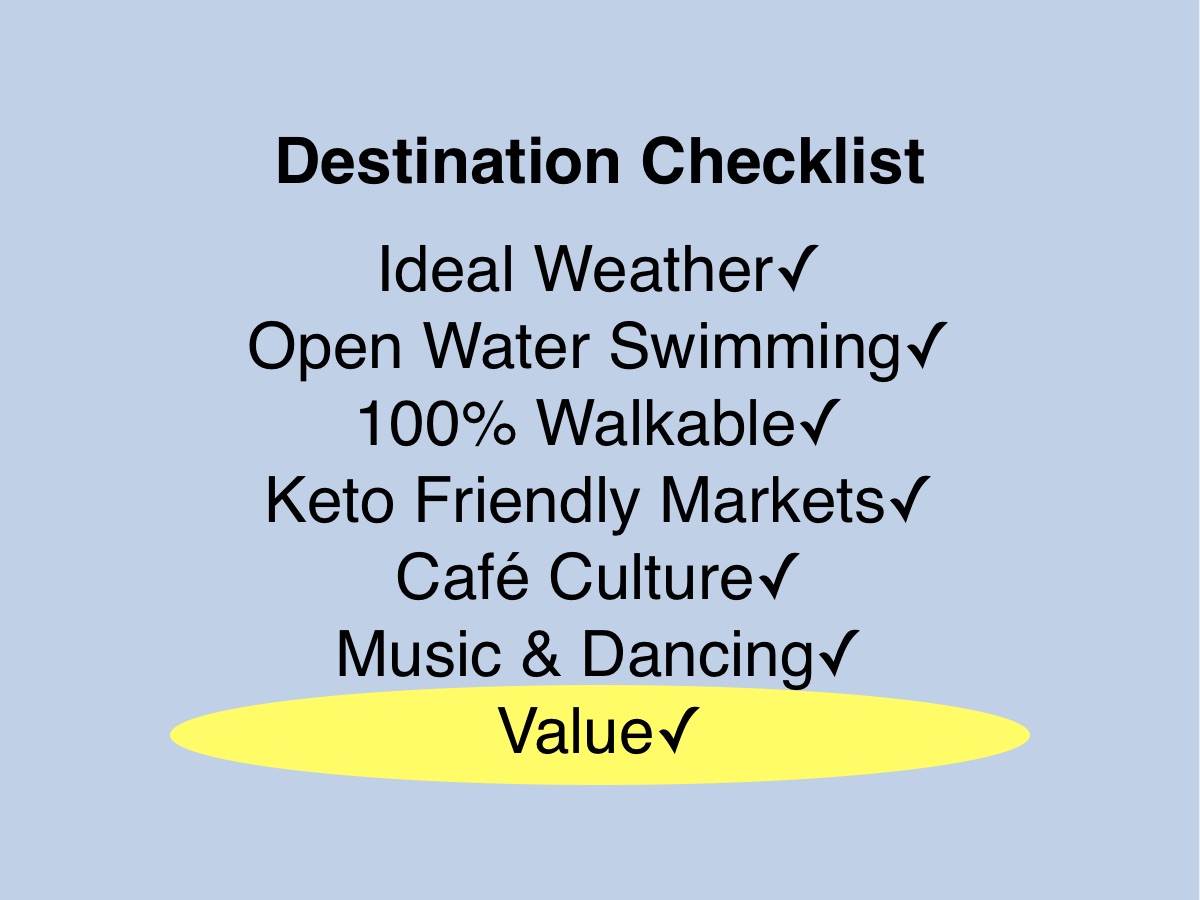
    This post is about a quick and easy way to calculate and compare values of slow travel destinations. Value is the last category on my Destination Checklist.

    This post is about evaluation of slow travel Destination Value which is one of seven categories on my Destination Checklist.  

    Let’s agree that:

    Destination Value = Quality ➗ Cost

    The quality part of the equation is a subjective summation of all Destination Checklist categories except Value. Only destinations of similar high quality are considered for slow travel.

    Therefore: Destination Value ≈ Cost

    The only cost data needed are high-season monthly rental rates because they are by far the largest expense for slow travelers.
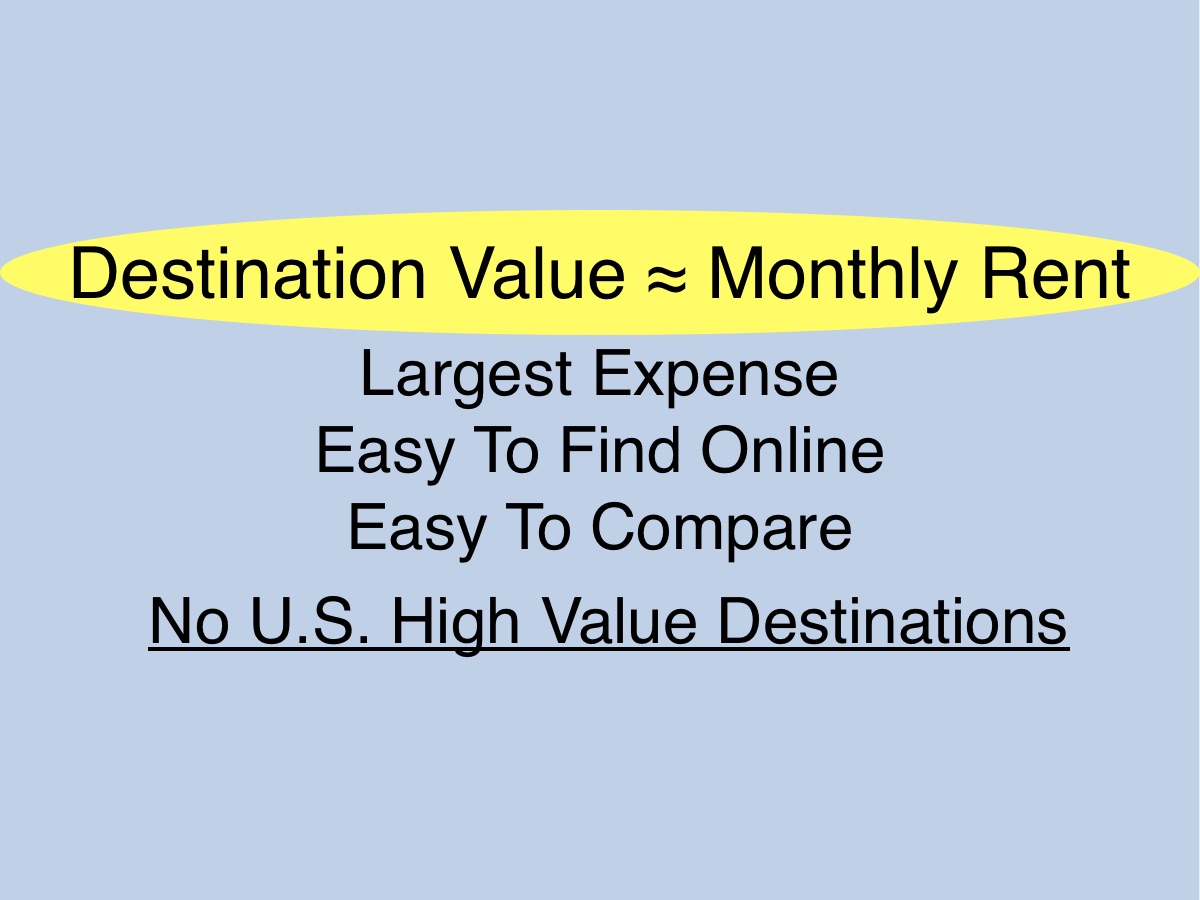
    Therefore: Destination Value ≈ Monthly Rent

    High-season rental rates are easy to find and compare at online rental aggregators like Airbnb and Booking.com.  For example, I reserved a high-season rental in Costa Rica that scored high on all categories of my Destination Checklist. I compared this to available rentals for a similar high-season period in Honolulu, HI. There were acceptable accommodations in Honolulu but they started at 2.5 times the Costa Rican rental rate.  Costa Rica’s lower rent makes it a better Value than Honolulu for a slow travel destination.

    Rental rates overshadow all other slow travel costs like airfare and food.  High-season monthly rental rates are the only data necessary to determine Destination Value.  I am unaware of any destination in United States with high enough Value for me to slow travel to. There are many places outside of the United States that score high in all Checklist categories including Value.
    Plan Ahead

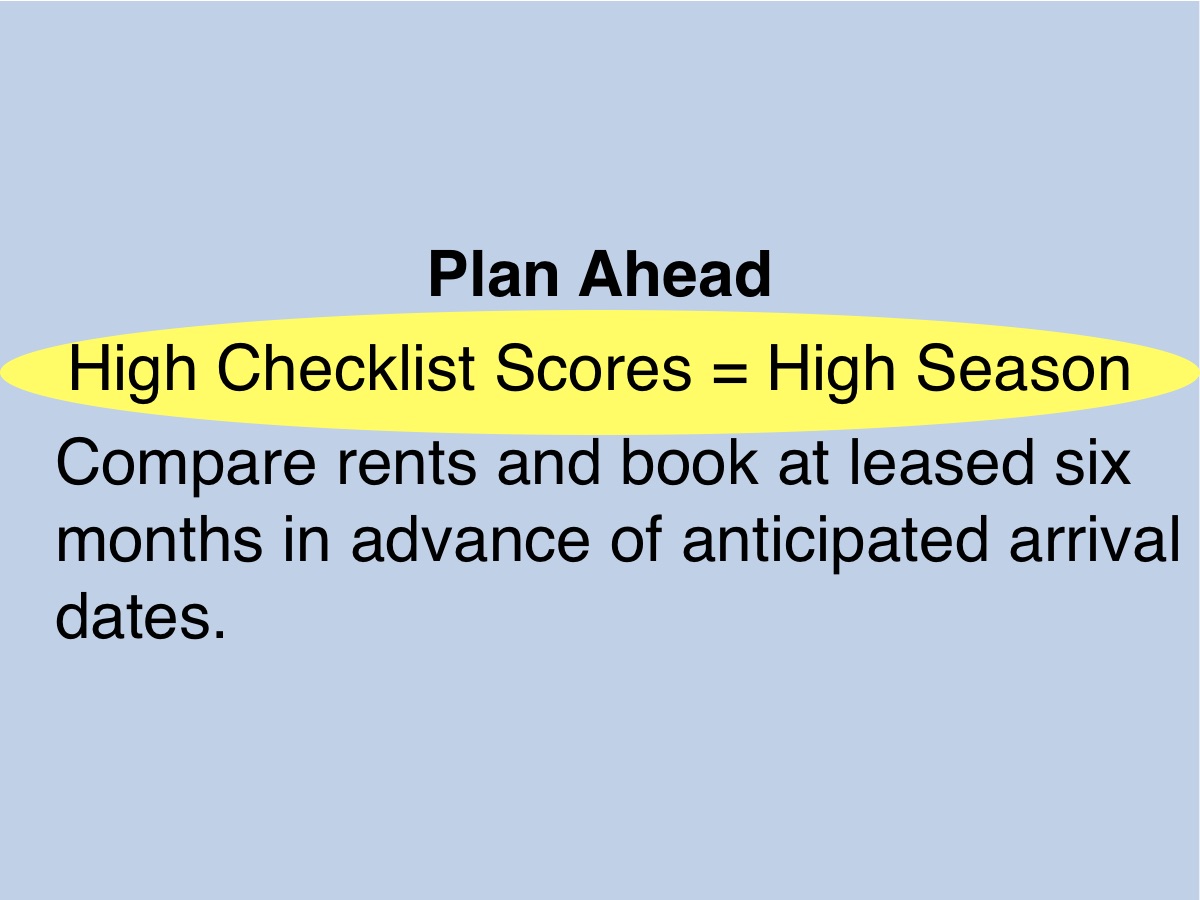
    Locations with high Destination Checklist scores are very desirable during Ideal Weather windows that span high tourist seasons and shoulder months immediately before and after.  Comparing rents and making reservations must be done well in advance of high-season to insure there are lots of vacancies to choose from. I compare rents and book accommodations at least six months in advance of anticipated arrival dates.  Booking late or after arrival does not work well for me.

    Choosing high Value destinations is a vital part of a slow-travel lifestyle that works well for me in my late seventies.  I am confident it will continue working well into the future.

    See my other posts for in-depth explanations of the all seven categories on my Destination Checklist.

    Please submit questions, comments and suggestions about slow travel and nomad living beyond 70.
  • Income Flow Chart

    Income Flow Chart

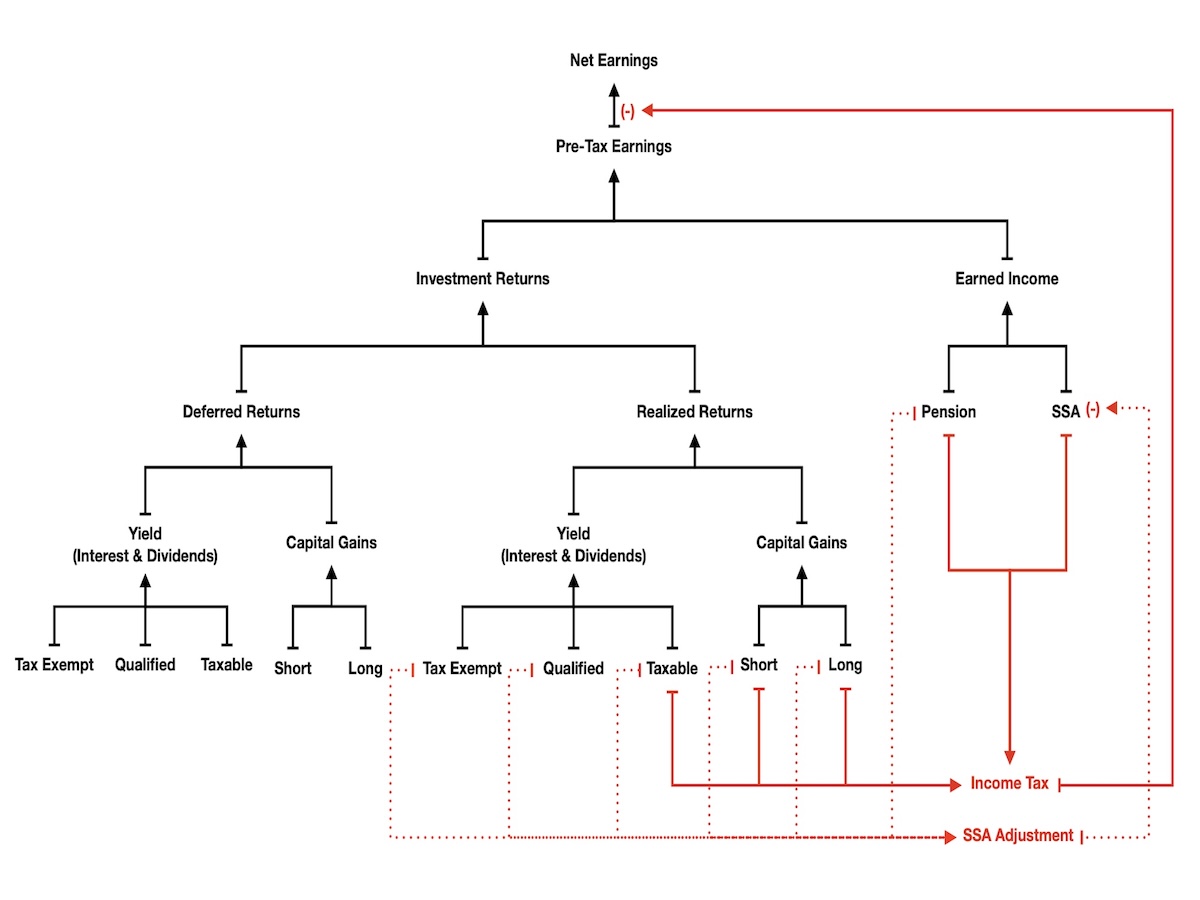
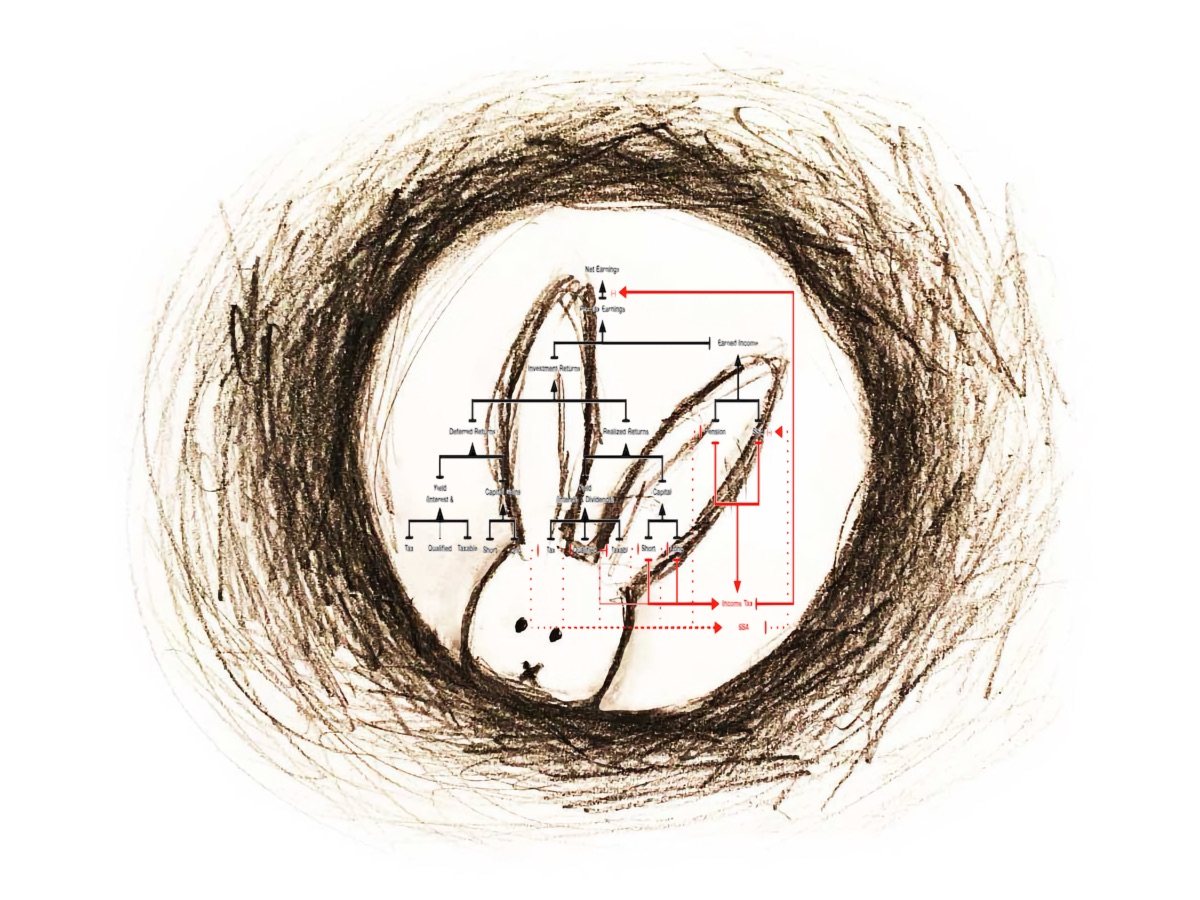
    The rabbit looking down the rabbit hole sees a flow chart of my earning and taxation streams (see larger version below). It’s not necessary for the rabbit (me) to go down the rabbit hole to understand all the parts and the complex equations linking them. It is only necessary to know they exist and which ones to try tweaking to maximize net earnings.

    It was a deep dive for me down the rabbit hole to come up with this scheme. I welcome questions, comments, criticism and suggestions about it.

  • Depreciating Assets

    Depreciating Assets

    This is not financial advice or a sales pitch for lifestyle or financial planning resources.  I have nothing to sell. Everyone’s financial path and circumstances are different.  Not owning depreciating assets is an essential part of my path to a nomadic life style.

    Many factors affect accumulation and maintenance wealth.  Time is one of them.  Time alone can destroy some forms of wealth.  For the sake of this discussion, I define these as depreciating assets.

    Real estate is a depreciating asset because, like many asset classes, expenditures are needed to protect value.  Monies required to protect real estate values are called carrying costs.  Carrying costs are high compared to maintenance fees of other asset classes.  Carrying costs include physical maintenance, repairs, taxes, assessments, insurance, HOA memberships and broker fees.  Money spent on carrying costs could be invested in non-depreciating assets.  Real estate always depreciates net wealth.

    Real estate depreciation can be offset and sometimes exceeded by recouped housing costs, rental income and/or inflation.  Recouped housing costs are a non-starter for me because nomads, by definition, do not live in one place.  Rental income may make sense for nomads that have rental management skills they can administer at a distance.  I have no such skills.  Inflation only makes sense to me for speculation on raw land.  Raw land has lower carrying costs than developed land but raw land owners still have to deal with issues like encroachment. I have no experience or expertise in land speculation.  The deal killer, for me, for all forms of real estate is its illiquidity.

    There is no need to explore the down sides of even worse depreciating assets like automobiles, boats and such.  I am fortunate to have divested myself from the hassles, wealth loss and illiquidity of depreciating assets.  Doing so allows me greater freedom to travel anywhere in the world.  In other posts, I examine:

  • Liquidity

    Liquidity

    This is not financial advice or a sales pitch for lifestyle or financial planning resources.  I have nothing to sell. Everyone’s financial path and circumstances are different.  Financial liquidity is an essential part of my path to a nomadic life style.

    Wealth by itself does not guarantee a desired life style.  Wealth is traded for things that facilitate a life style.  Nomads need access to wealth to buy things that support their life style.  Nomadic life styles are characterized by frequent relocations and lack of a permanent residence.  Nomads’ access their wealth should not be affected by these factors.  Nomads need to access their wealth where ever they go.  Nomads’ wealth needs to be liquid to do this. 

    The definition of liquid is “flowing freely but of constant volume.”  Liquid wealth moves freely without loss of value.  All of my wealth is liquid.  My money flows freely around the world without loss of value.  It is available to me any place connected to the internet.  My wealth is linked to credit and debit cards that I use to make local purchases or cash withdrawals from ATMs.  I never pay foreign exchange or transfer fees.

    I am fortunate to have liquid asset that are sufficient and accessible to allow me to travel anywhere in the world.  In other posts, I examine:

  • Financial Fundamentals

    Financial Fundamentals

    This is not financial advice or a sales pitch for lifestyle or financial planning resources.  I have nothing to sell. Everyone’s financial path and circumstances are different. This was my path to financial freedom.

    My lifetime sources of income and wealth include:

    • Non-fixed Income
      • Salaries
      • Wages
      • Tips
    • Fixed Income
      • Social Security
      • Pensions
    • Investment Returns
      • Dividends
      • Interest
      • Capital Gains
    • Inheritance

    I was self sufficient and living on my own at sixteen.  For 47 years my income was non-fixed.  I either worked full time or part time while attending school.  I was mostly employed by others and had a boss.  I have little experience with self-employment, property management, real estate speculation, trading financial instruments and other income sources.  I have fundamental knowledge and experience in long-term buy-and-hold investing which I began doing in 1987 with passive contributions to deferred compensation plans offered by my employer.

    I transitioned from non-fixed income (salary) to fixed income (pension, Social Security) when I retired in 2010 at the age of 63.  My employer-managed deferred compensation plans were consolidated and rolled over into to a single self-managed IRA account.  I inherited liquid assets and real estate n 2012.  I did not need the money or want the house.  The real estate was sold and the entire inheritance was invested in self-manage investment accounts.  All my expenses are meet by my pension and Social Security benefits with money left over to add to my investment portfolio.  I have never withdrawn any money from my investment portfolio.

    I feel fortunate to have had a stable job with a defined benefits pension, deferred compensation plans and Social Security.  In other posts, I examine: